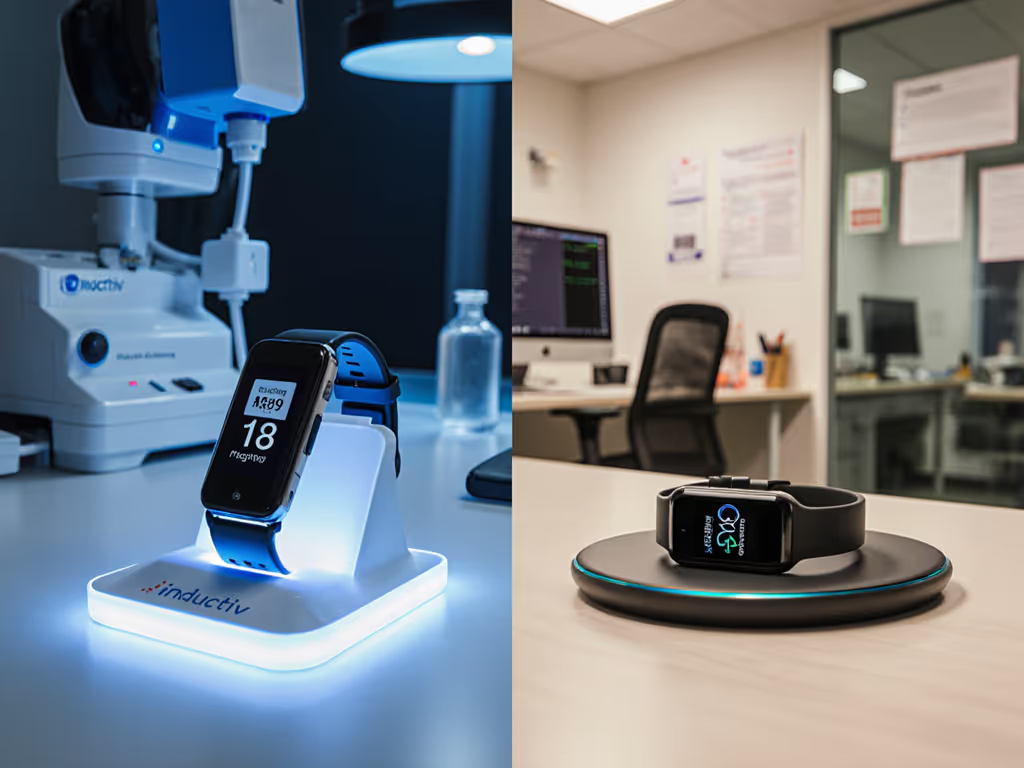
NFC Wireless Charging Explained: Ideal for Small Wearables
By Javier Ortiz • 13th Jan
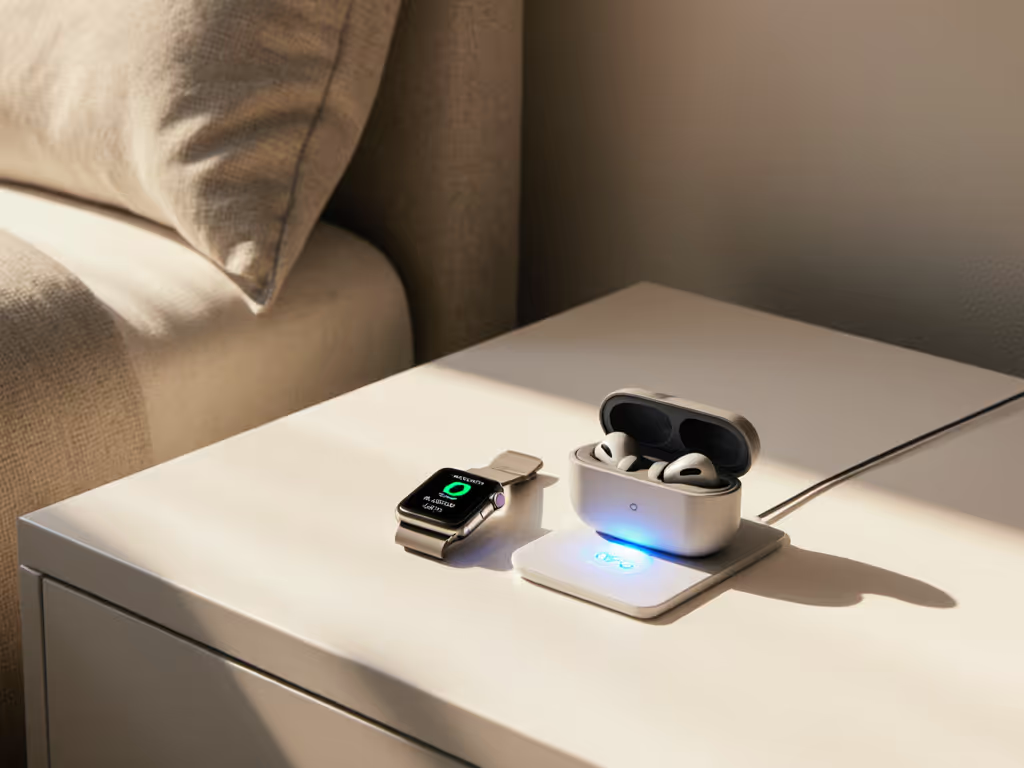
NFC Wireless Charging Explained: Why Your Earbuds Finally Get a Proper Home
When I designed a guest room for my parents, I realized clarity mattered as much as watts, labeling charging zones and matching materials to intent made all the difference. Today, NFC wireless charging explained in simple terms: it is the low-power wireless technology solving the very guest-friction I once tackled. Unlike high-wattage pads for phones, NFC charging operates at whisper-quiet power levels (under 1 W), making it perfect for the tiny devices we actually forget to plug in: earbuds, fitness trackers, and styluses. Forget wrestling with cables (this is where 'just place it' actually works).
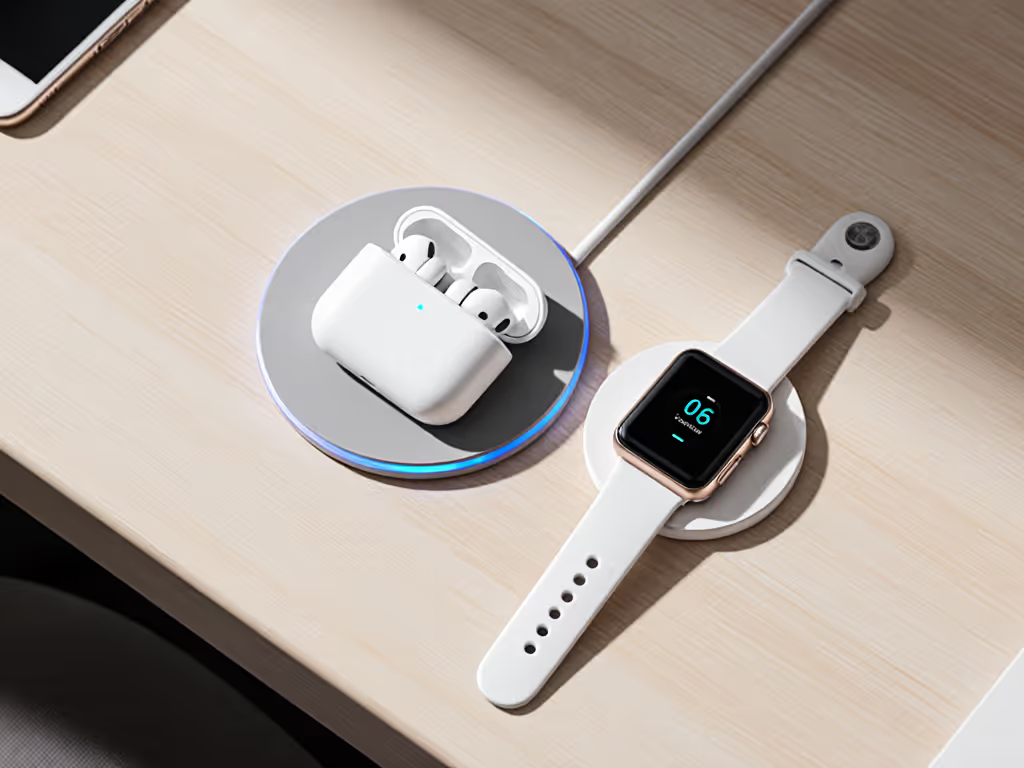
Why NFC Charging Isn't Magic: It is Physics With Purpose
NFC wireless charging leverages the same 13.56 MHz frequency used for tap-to-pay, but repurposes it for energy transfer efficiency. Here's what sets it apart:
- Contactless charging physics at work: No perfect alignment needed. Drop your earbuds on the pad anywhere within 2 cm, they will charge. Qi standards require precise coil matching; NFC's resonant inductive coupling works like a magnetic embrace, forgiving minor placement errors.
- NFC frequency specifications (13.56 MHz) enable dual data+power transfer. That is why your earbuds can sync pairing info while charging (no separate antenna cluttering their tiny casing).
- Wearables power requirements are finally met: Most earbuds need 250-500 mW. NFC delivers up to 1 W across static or negotiated modes (250 mW to 1000 mW), avoiding the slow-drip frustration of early solutions.
Calm spaces emerge when power has predictable, obvious homes.
This is not just convenience, it is safety. Lower power means minimal heat generation (critical for lithium batteries in earbuds), no noisy fans, and no battery anxiety. While your phone charger negotiates 15 W bursts, NFC pads hum along at safe, consistent levels. For devices charging hours per day (like wearables), this gentle approach preserves battery longevity far better than aggressive fast-charging.
Your Room-by-Room Wearable Charging Ecosystem
Forget one-size-fits-all pads. NFC's true power shines when integrated where wearables live. Here is how to build guest-friendly zones:
Entryway Tidy Station
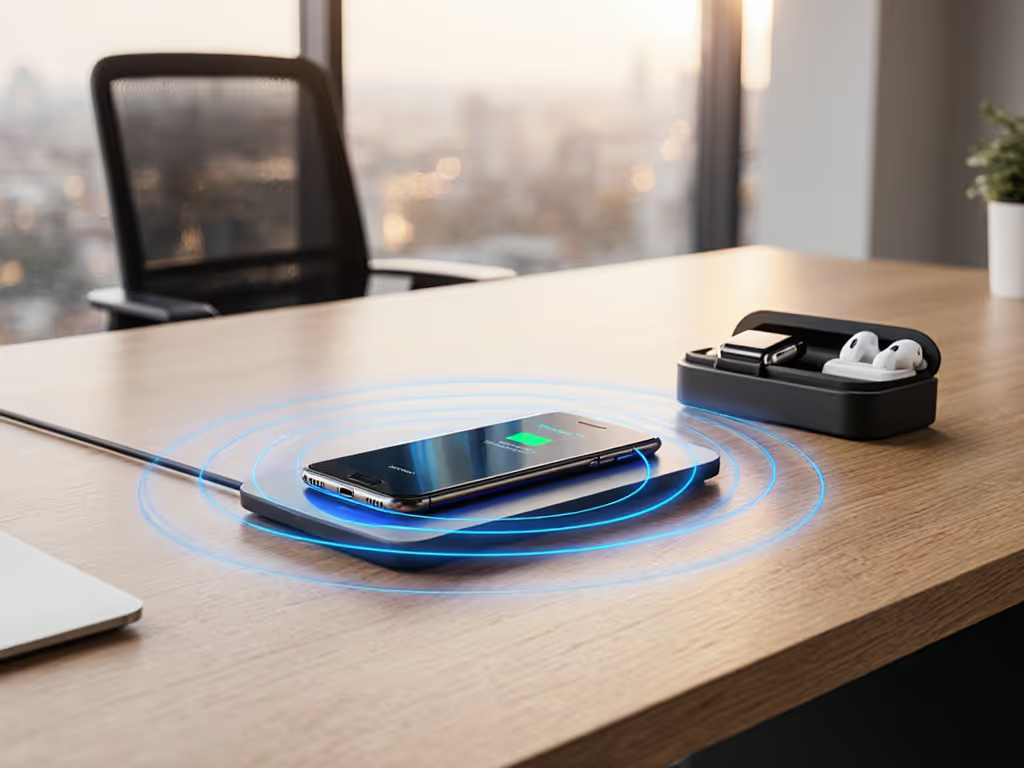
Place an NFC pad beside keys/coats, no more low battery panic when grabbing AirPods for the car. Pro tip: Use a leather-wrapped pad (matching your wallet) so guests instinctively know where to drop earbuds. Label beats lecture: etch a tiny headset icon on the pad's edge. This solves mixed-platform households since most premium earbuds now support NFC charging (Samsung Galaxy Buds, Bose QuietComfort, Jabra).
Nightstand Sanity Zone
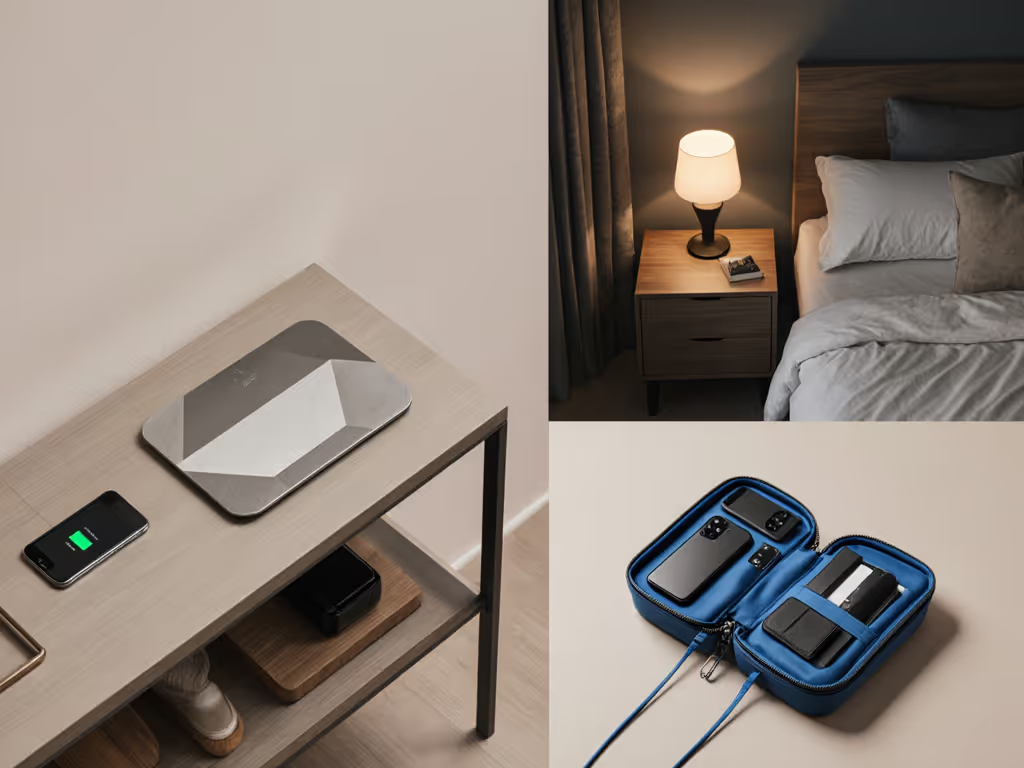
Ditch the blinking LED chaos. An NFC pad here charges earbuds while you sleep (silent, cool, and tucked under a minimalist tray). Pair it with a Qi2 pad for your phone (keeping wearables off the main pad prevents misalignment). Not sure which Qi2 pads are legit? See our Qi2 certification guide. This is where energy transfer efficiency creates peace: no heat spikes, no overnight battery drain from stray fields.
Travel Power Nest
One slim NFC pad fits in your laptop sleeve. At hotels, plug it into your universal GaN brick, it will top up earbuds during meetings without competing for the single outlet. Travelers hate 'nightstand roulette'; this is the universal guest solution hotels never knew they needed.
Why NFC Wins for Small Devices (Where Qi Falls Short)
Let's address the elephant in the room: Why not just use Qi for everything? Because physics is not negotiable. For the underlying science of transfer efficiency, read our electromagnetic induction primer. Qi charging requires tightly coupled coils (millimeters of tolerance) and often throttles below 5 W for small devices to avoid overheating. NFC's spatial freedom (2 cm range) and inherent low-power design bypass these issues.
| Feature | NFC Wireless Charging | Standard Qi | Ideal For |
|---|---|---|---|
| Max Power | 1 W | 15 W (adaptive) | Small wearables |
| Alignment Needs | Loose (2 cm tolerance) | Tight (coil-to-coil) | Cluttered zones |
| Heat Generation | Minimal (no fan needed) | Moderate (requires thermal management) | Nightstands/closed spaces |
| Guest Friendliness | Place-anywhere | Position-sensitive | Shared households |
This isn't a replacement for phone charging: it is the missing piece for your fragmented ecosystem. While your phone uses Qi2 for speed, your earbuds use NFC for set-and-forget reliability. Together, they create that seamless 'just works' experience your guests (and sleep-deprived future self) will thank you for.
Building Your Future-Proof Setup
Start small: One NFC pad per wearable hub (entryway, bedroom, office). Verify WLC 2.0 compliance (ensures 1 W power and 2 cm range), since counterfeit pads often cut corners here. Then, integrate visually:
- Material matching: Wood, leather, or ceramic pads blend with decor better than glossy black plastic.
- Label beats lecture: A tiny engraved icon (headset, shoe, pen) shows intent without instructions.
- Power budgeting: NFC pads draw minimal power (under 2 W). Your existing 30 W GaN brick powers them and a phone charger, no new outlet needed.
When my dad effortlessly docked his hearing aids on our NFC pad last holiday, he didn't just exhale: he smiled. That is the magic no spec sheet captures: when charging feels invisible, your space breathes easier. NFC wireless charging explained is not about wattage wars, it is about designing ecosystems where tiny devices finally have obvious, quiet homes.
Ready to simplify your clutter? Explore how NFC charging integrates with Qi2 for whole-home harmony: your wearables (and guests) will never go back.
Related Articles