Medical Wearable Charging vs Fitness Trackers: Clarity
By Javier Ortiz • 16th Apr
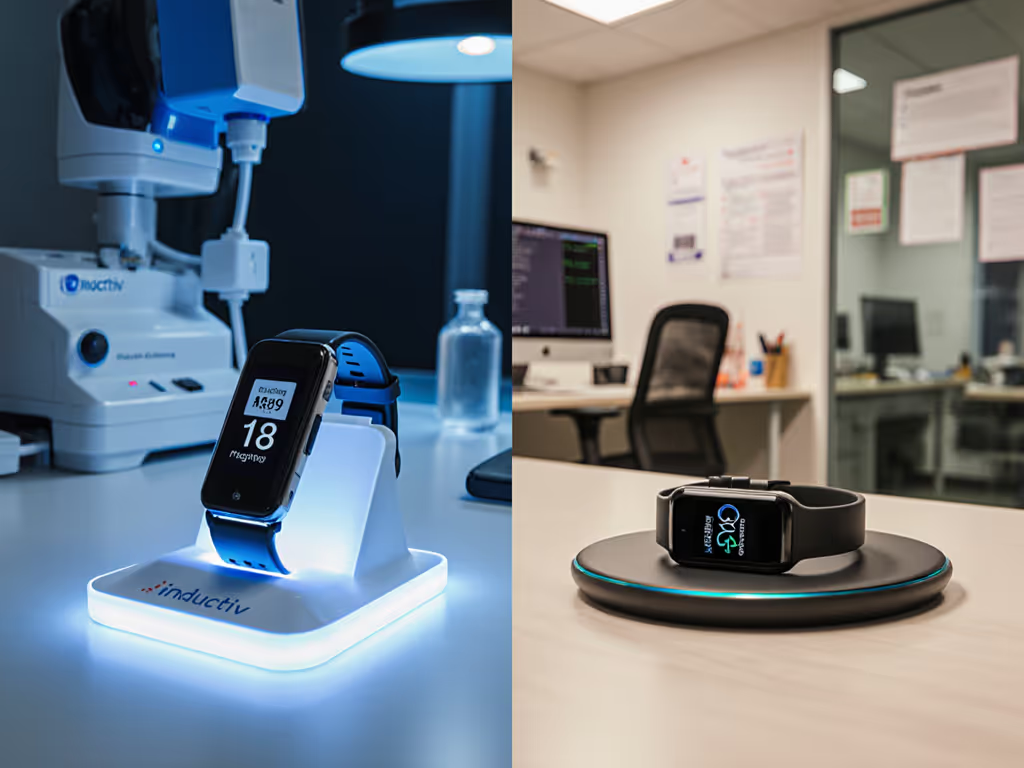
Medical wearable charging and fitness tracker charging can look identical at first glance, since both involve wireless power transfer to small, wearable devices. But beneath that surface similarity lies a fundamental difference in clinical grade wireless power standards, power delivery, safety constraints, and the stakes involved. Understanding this distinction reshapes not just your purchasing decisions, but also how you architect your home charging ecosystem for your own devices and those your guests or family members might rely on. For a deeper dive into clinical power and safety constraints, see our medical wireless charging safety guide.
The Problem: Surface Similarity Masks Critical Differences
When you see a smartwatch charging on a magnetic puck, and then see a medical-grade wearable glucose monitor charging the same way, your brain files them in the same category. After all, both are small, both use wireless power, both live on wrists or skin. But this mental shortcut misses the real picture.
Fitness trackers are designed for convenience and connectivity. They prioritize quick charging, sleek form factors, and ecosystem lock-in (Apple Watch, Samsung Galaxy Watch, Fitbit). Medical device charging standards, by contrast, are built around sterilization, long-term reliability, patient safety, and regulatory compliance[1]. A fitness tracker's battery wearing out after two years is an upgrade opportunity. A medical wearable's premature battery failure can mean discontinued monitoring of a critical health condition[3].
The distinction goes deeper than marketing language. It reflects genuine engineering trade-offs in power budgets, thermal tolerance, alignment precision, and the ability to sustain safe charging while a device remains in contact with skin or implanted in the body.
The Agitation: Why These Differences Matter Now
Consider the implications of confusing the two:
Battery longevity anxiety. Fitness trackers are expected to charge nightly, cycling through hundreds of shallow charge cycles before replacement. Medical wearables (especially those monitoring continuous glucose levels, heart rhythms, or medication delivery) often need to maintain charge for days or weeks between sessions, with no room for accelerated wear[3]. Pushing medical-grade wearables through fast-charging protocols designed for fitness trackers risks shortening their operational window, potentially causing gaps in critical health monitoring.
Sterilization and safety. Medical wearables that interface with healthcare environments must be cleanable, sometimes sterilizable[9]. Fitness trackers are consumer devices; they're not designed for high-heat sterilization or repeated disinfectant exposure. If you or a family member uses a medical device, applying fitness-tracker charging habits (or worse, sharing chargers across device types) can degrade the medical wearable's seal or power coil[1].
Thermal constraints. Fitness trackers tolerate a wider charging temperature range. Medical wearables, especially those worn 24/7 or implant-adjacent, have stricter thermal budgets[6]. Overheating during charging isn't just an aesthetic concern; it can affect drug delivery timing, sensor calibration, or patient comfort during already-sensitive monitoring.
Regulatory and compliance risk. Medical wearables operate under stricter certification frameworks. Using non-certified chargers or mixing charging environments risks voiding warranties or, in professional settings, creating liability issues[1][2].
The Core Difference: Medical Device Charging Standards vs Consumer Convenience
Let me map the key distinctions:
Power Delivery and Current Management
Fitness trackers typically accept charging currents up to 500 mA or higher, designed for quick turnarounds between uses. Medical wearable charging is more measured[2]. Systems like the Epson 5th generation PMIC for medical wearables cap at 300 mA, with integrated smart charging profiles that monitor battery state and adjust current in real time[2]. This isn't a limitation; it's intentional. Slower, monitored charging means less heat, longer battery life, and safer operation for skin-worn or implanted devices.
Medical devices also operate at different frequencies. Consumer wireless charging (Qi standard) uses 100-200 kHz induction. Medical-grade wireless power transfer systems operate at higher frequencies (up to 20 MHz), enabling more compact coils and better efficiency without the size penalties[2].
Alignment and Tolerance
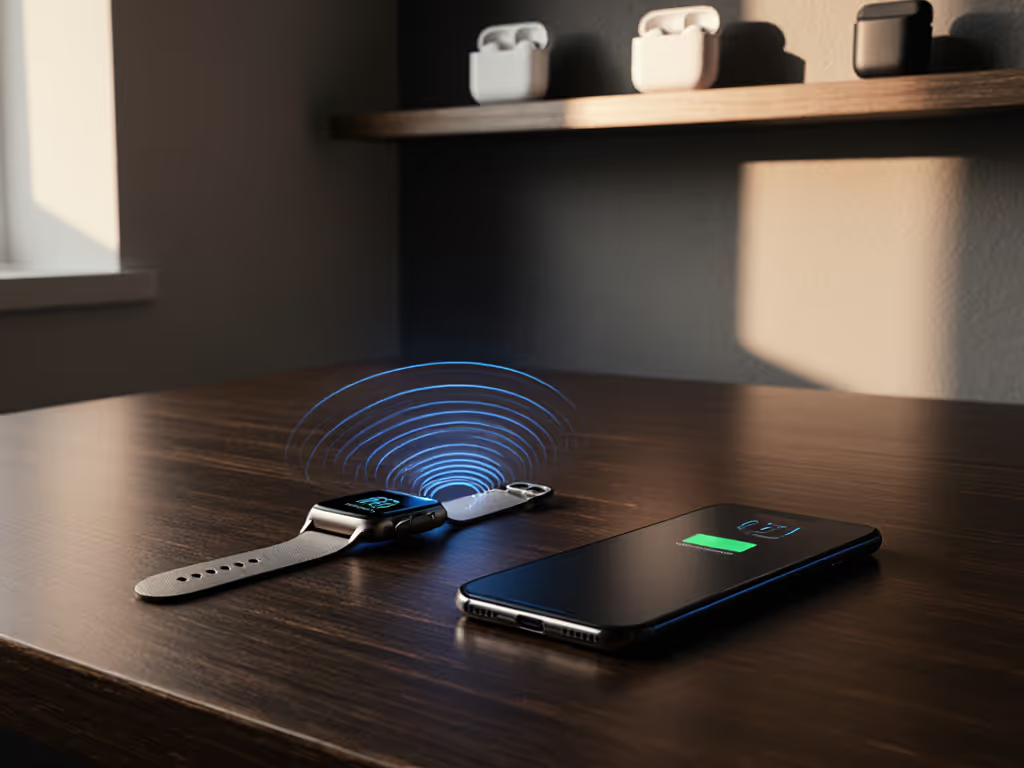
Fitness trackers demand millimeter-perfect alignment with their charging pucks. Move your Apple Watch an inch off the puck, and charging stops. Medical wearables, particularly those worn continuously or on non-rigid body surfaces, need more forgiving alignment. Magnetic resonance charging technology offers a wider "sweet spot," allowing devices to charge from anywhere within a reasonable range without constant repositioning[5]. This matters enormously for patients who can't fuss with precise positioning multiple times a day.
Integration and Simplicity
Fitness trackers often require proprietary chargers (Apple Watch, many Samsung models). This locks users into specific ecosystems but simplifies decision-making at purchase. Medical wearables, by contrast, are built on standardized medical device charging architectures[1][2]. This means hospitals, clinics, and patients can use consistent charging infrastructure across multiple manufacturers, a crucial feature in clinical environments where one standardized solution across a patient population beats dozens of proprietary variants.
Sterilization and Contact Safety
Medical-grade chargers are designed for repeated disinfection and, in some cases, steam sterilization[9]. The connector materials, coil coatings, and housing are selected for durability under these stresses. Fitness tracker chargers are not. Additionally, medical wearables are often engineered to charge safely while still in contact with skin or while a patient is wearing them continuously[1]. This requires redundant safety checks, thermal management, and battery monitoring that consumer wearables don't implement.
Comparison at a Glance
| Dimension | Fitness Trackers | Medical Wearables |
|---|---|---|
| Typical Charging Current | 500 mA - 1 A | 300 mA (monitored) |
| Wireless Power Frequency | 100-200 kHz (Qi) | Up to 20 MHz (high-efficiency) |
| Alignment Precision | Millimeter-exact | Wider tolerance |
| Charging Speed | Fast (30-60 min) | Moderate (1-2 hours) |
| Connector Durability | Consumer-grade | Medical-grade, sterilizable |
| Smart Battery Management | Basic | Integrated, real-time SoC monitoring[2] |
| Typical Charging Environment | Nightstand, desk | Home, clinic, bedside, implanted |
| Battery Cycle Expectation | 1-2 years | 3-5+ years |
The Solve: Building a Clear, Unified Charging Ecosystem
Now here's where clarity shapes action. Once you understand these differences, you can design a home charging strategy that respects both device types without friction.
Zone by Device Type
Create separate charging zones based on device category and use pattern:
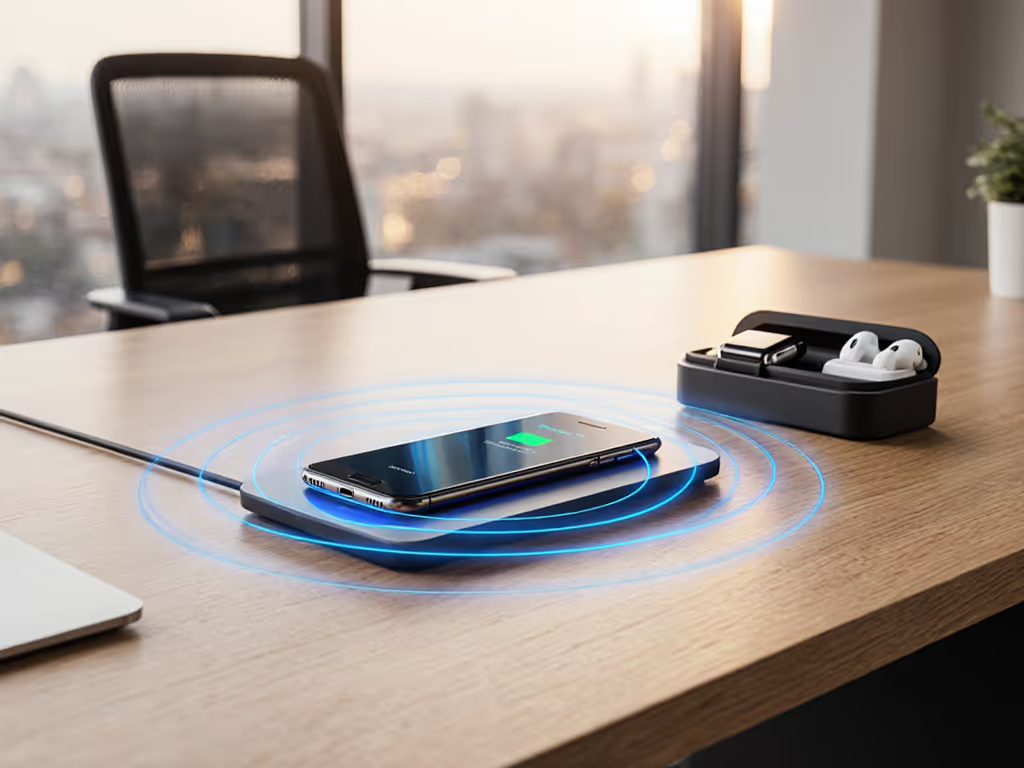
Fitness & wellness zone (nightstand, office desk). This is your fast-charging hub: Apple Watch puck, Samsung Galaxy Watch dock, fitness tracker pads. These devices are expected to charge overnight or during brief desk sessions. Comfort and convenience matter; aesthetics matter; speed matters. You might use a multi-device pad here, charging watch, earbuds, and tracker on the same surface.
Medical and health-monitoring zone (bedroom, bathroom, specific shelf). If you or a family member uses a medical wearable (continuous glucose monitor, heart-rate patch, implant-adjacent charger), this zone needs its own dedicated pads and power supply[1][3]. Physically separate this from consumer wearables. Label the pads clearly with device names and the charging frequency (e.g., "CGM - charge every 7 days"). This removes guesswork and prevents accidental use of the wrong charger.
Calm spaces emerge when power has predictable, obvious homes.
Power Budget Allocation
Each zone needs its own power adapter sized appropriately. Fitness trackers typically pull 5-10W. Medical wearables often pull less, 3-5W, but need stable, clean power[2]. Don't daisy-chain them onto the same adapter or power strip. Medical devices benefit from a dedicated, high-quality USB-C power supply with good filtering. This sounds like overkill, but stability reduces thermal noise and charging volatility.
Labeling and Clarity
Here's where my experience in hospitality informed my home tech practice: label beats lecture. Don't rely on people to remember which pad is which or when to charge. Use small, weatherproof labels on pads and chargers:
- "Apple Watch – 15 min for 80%"
- "Fitness Tracker – charge before bed"
- "Medical – Dr. recommended schedule"
- "Guests: use white pad for phones, black for earbuds"
Years ago, when I set up charging for my parents' guest room, I realized they were anxious about 'breaking' our chargers. I color-coded pads, labeled intent with small icons, and grouped compatible devices together. My dad docked his phone on the first try and actually exhaled. That's when I learned clarity matters as much as watts.
Future-Proofing
Medical wearable charging standards are evolving toward Qi2-compatible architectures[2]. As new medical devices enter the market, they'll increasingly use open standards rather than proprietary connectors. Build your zones with this in mind: invest in certified, standards-based chargers rather than single-manufacturer bundles. This gives you flexibility as new devices arrive and older ones retire. To verify products and avoid counterfeits, use our Qi2 certification guide when buying new chargers.
Why Understanding Builds Confidence
The technical differences between medical device charging standards and fitness tracker charging aren't obstacles, they're guardrails. They exist because the stakes are different. A fitness tracker's battery wearing out is inconvenient. A medical wearable's premature battery failure can mean lost health data or interrupted monitoring.
When you understand these distinctions, you stop second-guessing your choices. You stop worrying that you've bought the wrong charger. You create a home charging ecosystem that is fast, cool, visually calm, and future-ready, and that works intuitively for your guests too, because the system itself communicates its logic through clear zones and labeling.
Further Exploration
If you or someone in your household relies on medical wearables, your next step is to verify which wearable sensor power comparison framework applies to your specific device. Check with the device manufacturer or your healthcare provider for their recommended charging environment, frequency, and power specifications. Compare that guidance against your current fitness tracker setup, and you may need separate zones, different power supplies, or sterilizable chargers.
For those building multi-device households (mix of Apple, Android, medical, and consumer devices), map your rooms and identify your zones. Start with one area (your nightstand or workspace) and implement clear labeling and dedicated power. Once that zone is calm and intuitive, expand outward.
The goal isn't perfection; it's clarity. When power has an obvious home, you relax. Your guests relax. Your devices last longer. And the difference is built entirely from understanding, not from buying more expensive gear.
Related Articles