Solid-State Wireless Charging: Lower Heat, Longer Battery Life
By Asha Raman • 10th Jan
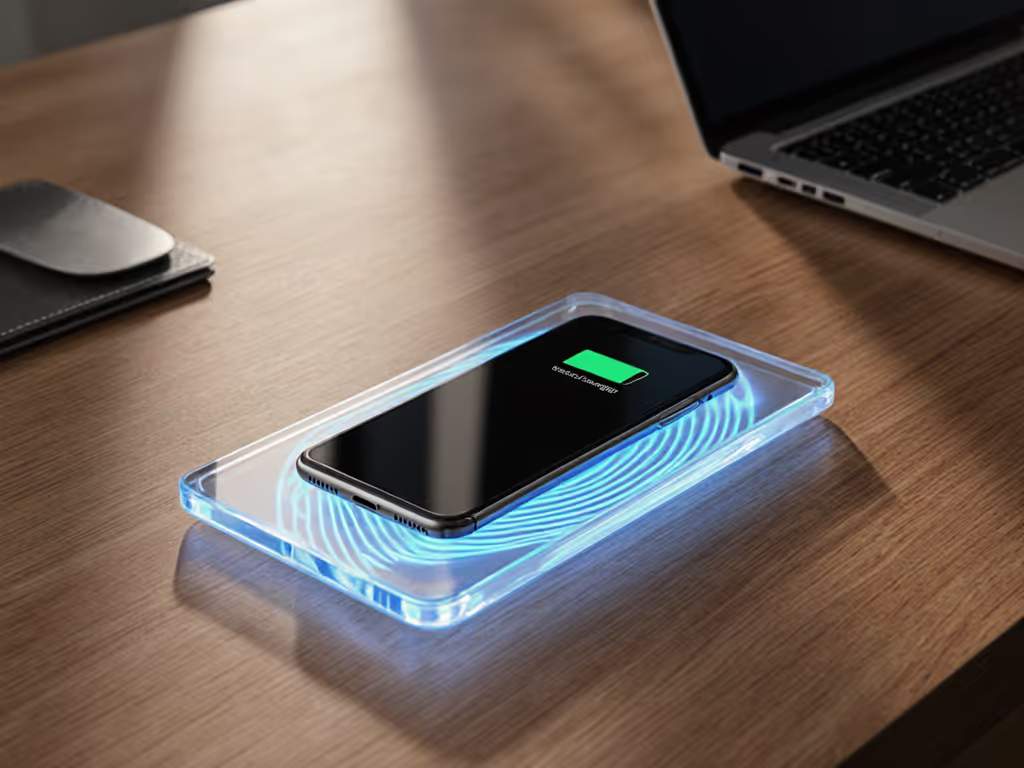
Forget everything you thought you knew about wireless charging limitations. The next-gen battery charging revolution isn't just about speed, it is about fundamentally rethinking how energy moves from your wireless charger to your device's power cell. As solid-state technology matures, we're seeing a paradigm shift where thermal management becomes the priority rather than an afterthought. This isn't just incremental improvement; it's a complete reimagining of battery-wireless integration that could finally deliver on the promise of truly safe, sustainable charging.
Why does my wireless charger make my phone hot, and why should I care?
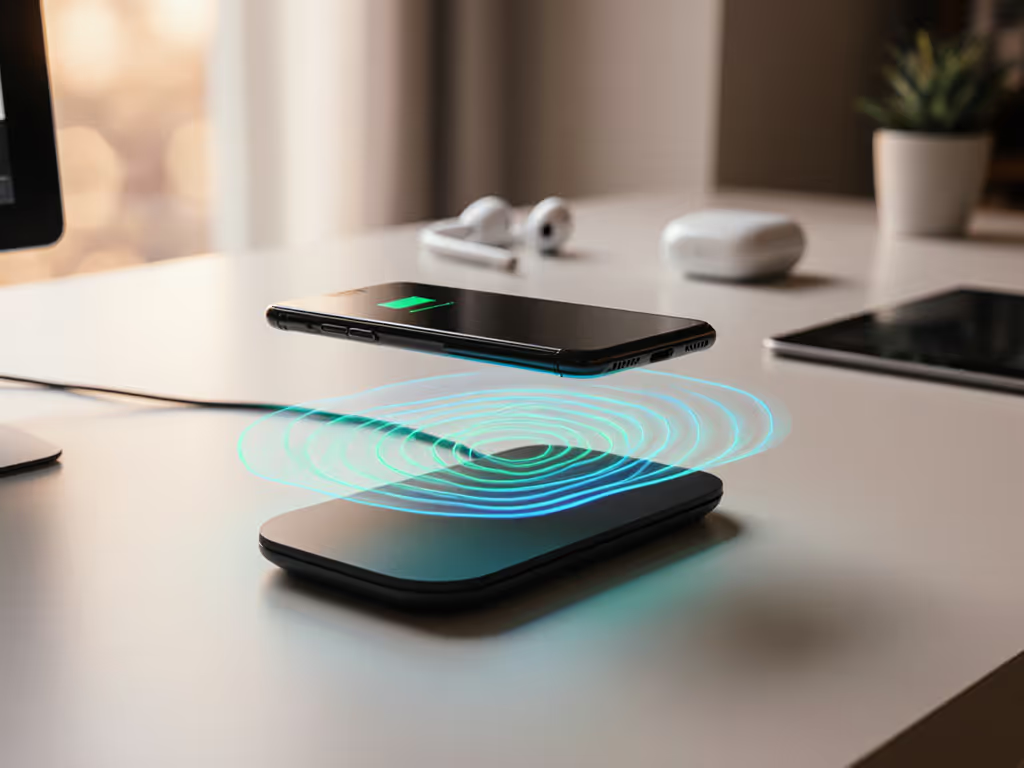
Wireless charging relies on electromagnetic induction, where alternating current in the transmitter coil creates a magnetic field that induces current in your device's receiver coil. This process inherently generates heat through two main mechanisms: resistive losses in the coils and eddy currents in nearby metal components.
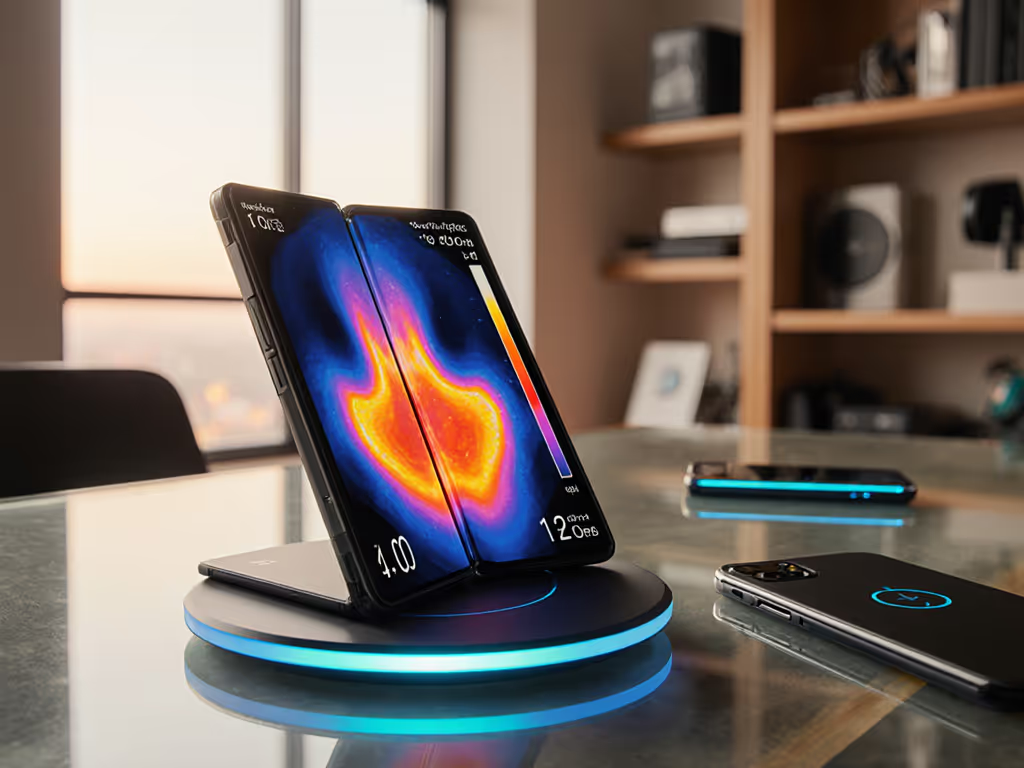
Most standard wireless chargers operate at 70-80% efficiency compared to wired charging's 90%+. That 20-30% energy loss primarily manifests as heat, often pushing devices above 40°C during sustained charging sessions. Research from Battery University confirms that lithium-ion batteries exposed to temperatures above 35°C experience accelerated degradation, with every 10°C increase above 25°C potentially halving battery lifespan.
How does heat actually damage my battery during wireless charging?
The relationship between heat and battery degradation follows Arrhenius kinetics (essentially, chemical reactions speed up exponentially with temperature). At 40°C, your battery's internal components undergo:
- Electrolyte breakdown: The liquid electrolyte decomposes faster, reducing ion mobility
- SEI layer growth: The protective layer on the anode thickens unnecessarily, consuming active lithium
- Cathode deterioration: Structural changes reduce capacity retention
A 2023 study in the Journal of Power Sources demonstrated that smartphones regularly charged above 40°C showed 25% faster capacity loss after 500 cycles compared to those maintained below 35°C. This is why I always emphasize: Keep it under 40°C when possible.
How do solid-state batteries change the wireless charging landscape?
Solid-state batteries replace the flammable liquid electrolyte with a solid ceramic or polymer alternative. This fundamental shift delivers three critical advantages for wireless charging:
- Higher thermal stability: Solid electrolytes maintain integrity up to 150°C+ versus 60-70°C for conventional electrolytes
- Reduced internal resistance: Enabling more efficient energy transfer with less heat generation
- Faster ion diffusion: Allowing higher charge rates without thermal runaway risks
The solid-state charging efficiency gains come primarily from eliminating the thermal throttling that plagues current wireless systems. When my phone hit 43°C during that summer road trip (triggering navigation stutter and battery miscalculation), it was the liquid electrolyte's thermal limitations screaming for relief. Solid-state cells simply don't have that same breaking point.
What's different about thermal management in solid-state wireless systems?
Traditional wireless charging systems combat heat through:
- External cooling fans (adding noise and bulk)
- Power throttling (slowing charge rates)
- Aluminum heat sinks (increasing weight)
Solid-state thermal management approaches work differently by addressing heat at its source:
- Integrated thermal pathways: Direct heat conduction from the battery cell to chassis
- Material science innovations: Phase-change materials that absorb heat during charging
- Intelligent power modulation: Maintaining optimal temperature without sacrificing speed
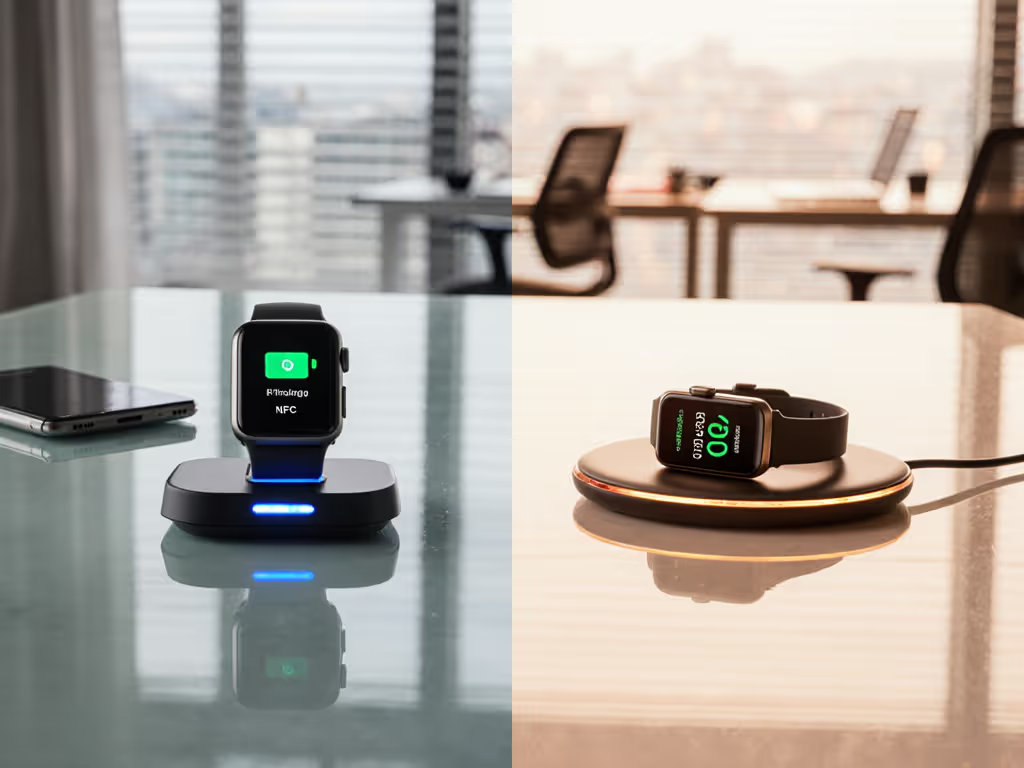
Apple's MagSafe implementation already demonstrates this principle by using precise magnet alignment to maximize coupling efficiency (reducing energy loss) while incorporating thermal sensors that dynamically adjust power. If you're deciding between standards, our MagSafe vs Qi for iPhone explains heat, alignment, and real-world speed differences. The next evolution with solid-state technology will make these systems even more responsive.
Can I trust "fast wireless charging" claims without harming my battery?
This is where understanding wireless charging battery chemistry becomes critical. Not all "15W" chargers deliver the same experience:
- True 15W requires: Qi2 certification, MagSafe alignment, and a 20W+ power adapter
- Actual delivered power: Typically 7-10W after efficiency losses and thermal throttling
- Temperature sensitivity: Most devices throttle to 5W when above 38°C
The Federal Trade Commission recently warned against "peak power" marketing. What matters is sustained power delivery. See our wireless charging speed test for measured sustained watts and thermal throttling data. A charger that maintains 10W at 35°C delivers more actual energy than one hitting 15W briefly before thermal throttling kicks in.
Practical safeguards for today's wireless charging (until solid-state arrives)
While we await widespread solid-state adoption, implement these evidence-backed strategies:
- Monitor temperature: Use apps like coconutBattery (macOS) or AccuBattery (Android) to track charging temperatures
- Remove thick cases: Hard-shell cases can trap 5-7°C of additional heat during charging
- Choose the right pad: Qi2-certified chargers with MagSafe alignment deliver more consistent power with less heat
- Optimize placement: Avoid direct sunlight and ensure at least 1 cm of airflow around devices
- Schedule charging: Delay peak charging to cooler evening hours when possible
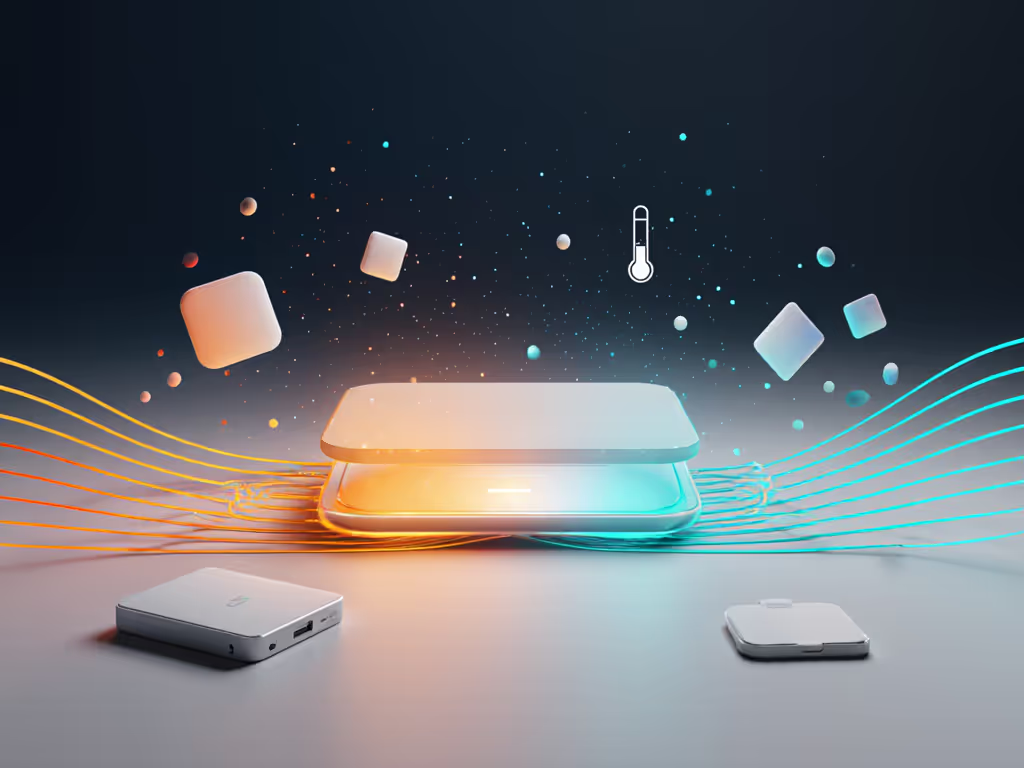
The future of battery-wireless integration
We're entering an era where battery-wireless integration will be seamless. For how major standards manage efficiency and heat, see our Qi vs AirFuel comparison. Expect to see:
- Embedded charging coils: Directly integrated into battery modules for better heat dissipation
- Smart thermal negotiation: Devices and chargers communicating optimal power levels based on real-time temperature
- Adaptive charging profiles: Automatically adjusting speed based on device usage patterns and ambient conditions
Keep it under 40°C when possible. This simple threshold could extend your battery's usable life by months or even years.
Final thoughts: Prioritizing longevity over speed
The most significant shift in next-gen battery charging isn't about watts, it's about recognizing that protecting the battery ecosystem creates better long-term performance. As solid-state technology matures, we'll see wireless charging systems designed from the ground up with thermal management as the primary constraint rather than speed.
Protect the pack, and performance naturally lasts the distance. That bargain mount that cooked my phone taught me to prioritize thermal safety first, because no amount of charging speed matters if your battery can't hold a meaningful charge.
Further Exploration
Want to dive deeper into battery longevity strategies? Check these authoritative resources:
- IEEE's Best Practices for Lithium-Ion Battery Thermal Management (2025)
- Consumer Reports' Wireless Charging Efficiency Testing Methodology
- Samsung's Battery Care feature documentation showing temperature-optimized charging
Your battery will thank you for the extra attention to temperature, because in the long run, a cool battery is always the longest-lived battery.
Related Articles