Construction Site Wireless Charging: FAQ
By Asha Raman • 20th Apr
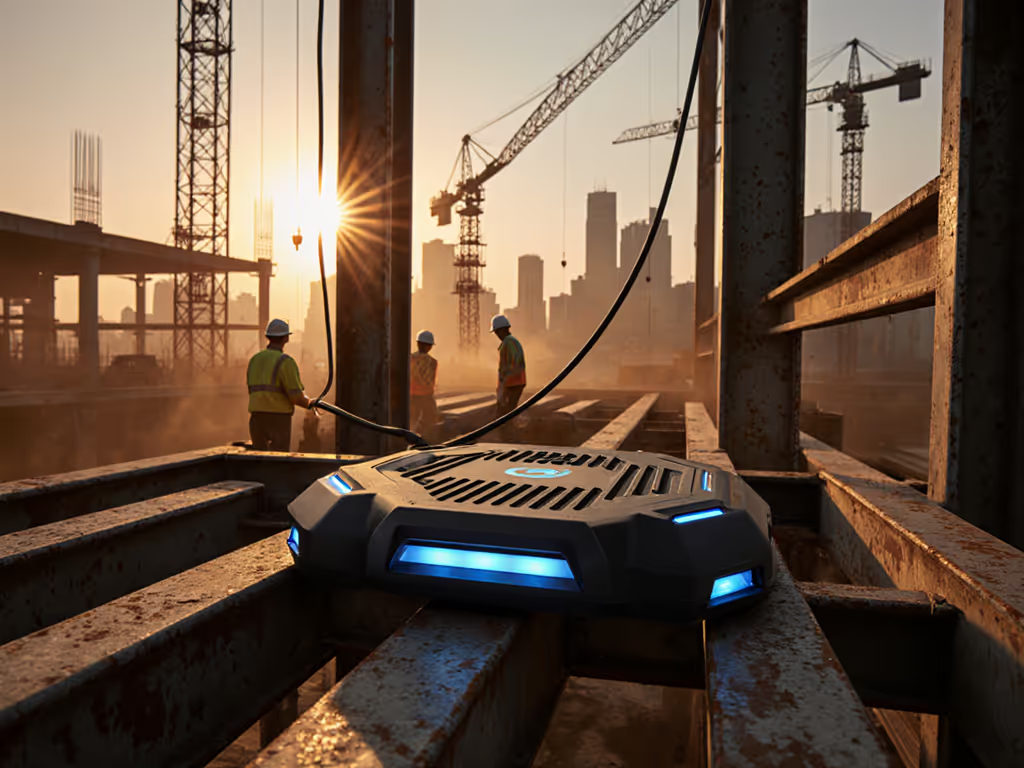
Wireless charging has moved beyond smartphones into industrial and construction environments, where construction site wireless power systems are beginning to solve a persistent operational problem: keeping equipment powered safely and efficiently without tangled cables, corroded connectors, or extended downtime. This FAQ addresses the most common questions about deploying wireless power on worksites, from power requirements and durability standards to temperature management and practical installation.
Understanding Construction Site Wireless Power
What is construction site wireless power, and how does it differ from consumer wireless charging?
Construction site wireless power refers to inductive charging systems engineered for heavy equipment, cordless tools, battery packs, and mobile devices in rugged, often dusty environments. Unlike consumer wireless chargers, which typically deliver 5 to 15 W, industrial worksite systems can deliver significantly higher power. Demonstration systems provide up to 33 W, while commercial platforms serving mobile robotics and transport equipment range from 1 kW to 36 kW. The critical distinction is durability: construction systems prioritize IP65 certification (dust and splash resistance), continuous outdoor operation, and minimal maintenance compared to cable-based alternatives. For rugged, vibration-resistant options validated in harsh environments, see our industrial wireless chargers tested.
How does inductive coupling power construction equipment?
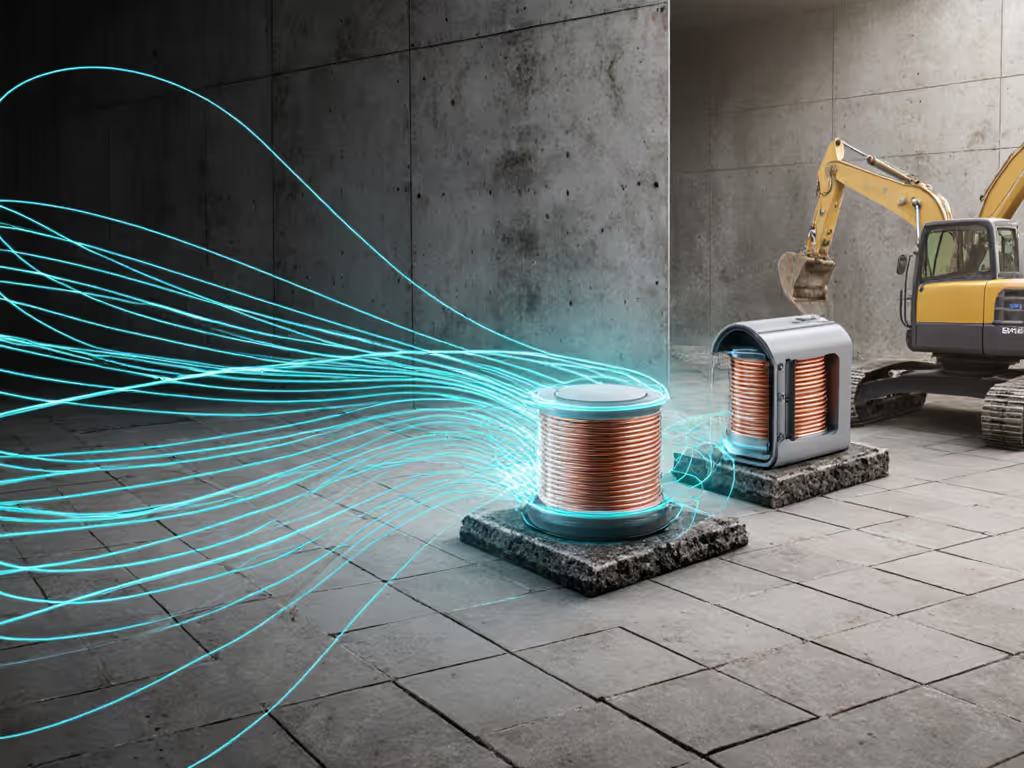
Wireless charging on construction sites uses inductive coupling between a transmitter coil and a receiver coil. When the transmitter is energized, it generates a magnetic field that induces current in the receiver, transferring energy through the air without physical contact. A practical implementation detects when equipment arrives at a charging station using proximity sensors, activates the transmitter coil beneath or adjacent to the equipment, and the receiver harvests energy wirelessly. This approach eliminates connector wear, prevents moisture ingress into electrical contacts, and significantly reduces maintenance costs. For a plain-English look at how coils transfer power efficiently, read our electromagnetic induction efficiency guide.
What power levels are practical for construction equipment?
Power output requirements depend on your application. Cordless drill batteries and small handheld tools may charge effectively at 50 to 200 W, while larger equipment batteries or site-wide systems demand higher output. Industrial platforms serving autonomous ground vehicles and mobile robotics, similar to heavy construction equipment, operate from 1 kW to 36 kW. For a typical construction site managing cordless power tools, multi-device charging stations, and site lighting, a 200 to 500 W worksite charging solution is often practical, though your specific needs depend on equipment specifications and peak simultaneous charging demands.
Durability and Environmental Resilience
Why is dust resistance critical on construction sites?
Construction environments generate dust, sand, mud, and moisture that corrode and damage exposed electronics. Dust ingress can degrade coil alignment, interfere with magnetic coupling efficiency, block cooling vents, and potentially cause overheating and battery damage. A dust resistant wireless power system rated IP65 means both transmitter and receiver are sealed against dust and low-pressure water jets. For gear proven in rain, spray, and outdoor exposure, check our IP68 outdoor chargers. This design eliminates the weakest point of traditional corded charging: exposed connectors that corrode, short-circuit, or fail on wet, muddy sites. Wireless systems, once installed, require no connector maintenance and perform reliably in adverse weather.
How does temperature management protect battery and equipment lifespan?
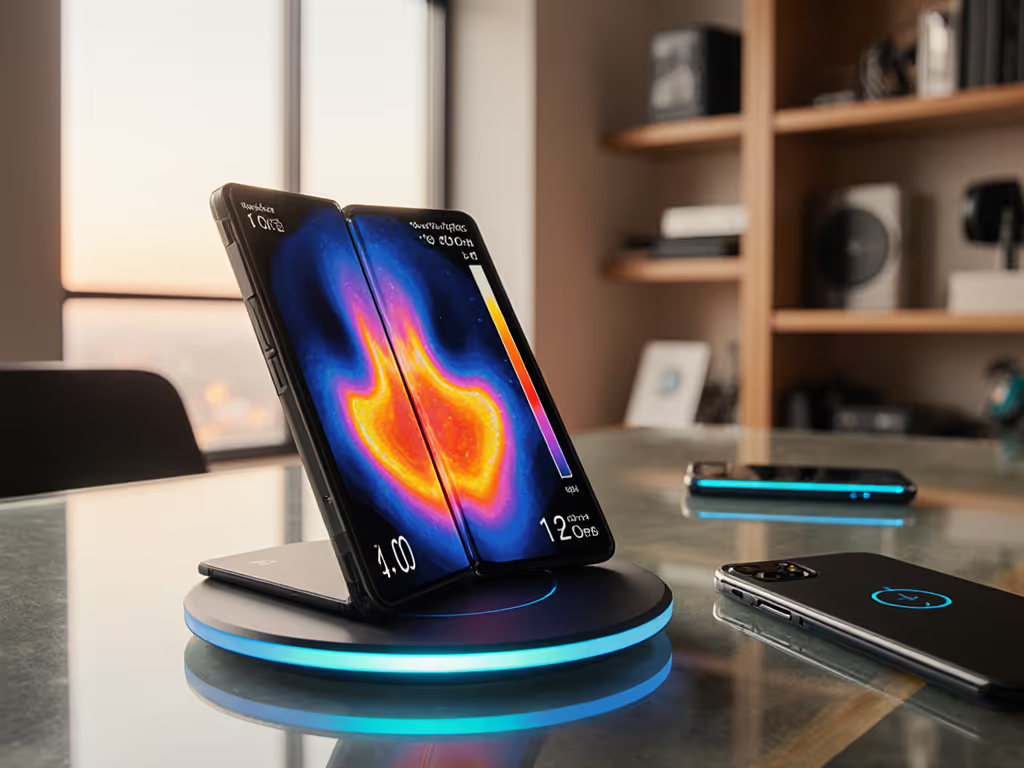
Battery longevity is directly tied to operating temperature. Lithium-ion batteries in cordless tools and site equipment degrade faster at elevated temperatures; every 10 °C above optimal conditions can cut cycle life by half. Wireless charging systems generate heat at the coils and in power conversion circuits. On an open construction site where equipment may sit in direct sun (much like an experience I had on a summer road trip when a bargain fast-charging mount cooked my phone's battery above 43 °C, causing navigation to stutter and battery estimates to plummet), outdoor heat stress is real and measurable.
A cool battery is a long-lived battery. Choose heavy equipment wireless charging systems with efficient power transfer (high-efficiency coils minimize waste heat) and position charging stations in shaded or covered areas when possible. Keep it under 40°C when possible. If your site regularly operates in high heat, confirm the wireless system has thermal management, either natural convection cooling via its enclosure or active cooling, and verify that firmware throttles charging power if temperatures rise above manufacturer thresholds. This discipline extends both battery capacity and overall equipment service life.
Can multiple pieces of equipment charge simultaneously?
Yes, with proper system design. A worksite can deploy multiple transmitter coils positioned strategically (for example, one in a tool storage shed, another near the site office, and a third at a service vehicle parking area). Each transmitter activates only when equipment with a receiver approaches via proximity sensor or manual activation. By ensuring only the particular coil near the equipment is ever energized, this configuration lowers power waste and increases energy efficiency. For small sites with a few tools, a single multi-device charging pad may suffice. For larger operations with dozens of cordless tools and equipment, a distributed network of charging zones is more practical and reduces congestion and wait times.
Standards, Safety, and Practical Deployment
What standards and certifications should I verify?
Wireless power systems must meet safety and interoperability standards to ensure reliable, hazard-free operation. If you need a refresher on certifications across regions, see our wireless charging regulations. Look for AirFuel™ Alliance certification, which indicates compliance with open wireless power standards and verified safe air-gap power transfer. In regulated markets, demand CE marking (EU) or FCC certification (US). For battery charging, the system should comply with IEC 61960 or equivalent lithium-ion safety standards. Beyond certifications, request and review test data from vendors: measured coil efficiency, air-gap tolerance, foreign object detection (FOD) sensitivity, and thermal curves under full load in ambient heat. Certification alone is not a guarantee of suitability for your site; pair it with real-world performance data specific to your tools and conditions.
How does foreign object detection improve safety on site?
Foreign object detection (FOD) is a critical safety feature in construction environments, where metal debris, including nails, rebar, and steel fasteners, regularly litter worksites. If a metal object lodges between transmitter and receiver coils, it can absorb energy, overheat, and create a fire hazard. FOD-equipped systems detect metallic objects and either disable the transmitter or reduce power to safe levels. This is non-negotiable for outdoor or high-debris sites.
What about weather protection and electrical infrastructure?
One primary advantage of wireless charging on construction sites is eliminating extension cords snaking across the site, a tripping hazard, cable damage vector, and source of connector corrosion. Once installed, a wireless charging station requires only a single protected power supply line to the site's electrical panel or portable generator. The transmitter and receiver coils are sealed, dramatically reducing weather-related failures. However, the external electrical infrastructure must still be weatherproofed: use GFCI-protected outlets, cable conduit rated for outdoor UV exposure, and enclosures with drain holes to prevent water pooling. A well-engineered outdoor wireless system is more robust than dozens of extension cords and corded chargers.
Practical Considerations and Limitations
Are there trade-offs to be aware of?
Yes. Wireless charging is often slower than some high-amperage direct fast-charging methods for large batteries (for instance, a 5 Ah cordless drill battery may take longer to fully charge wirelessly than via a dedicated fast charger). Air-gap distance is critical: if the receiver and transmitter are misaligned or separated beyond design limits, efficiency drops sharply, and charging may stall. Metal objects between coils (common on construction sites) interfere with the magnetic field, which is why FOD is essential. Wireless systems also carry higher upfront capital costs than traditional cord-based charging; ROI depends on reduced tool maintenance, extended battery and equipment lifespan, minimized downtime, and labor saved avoiding cable repairs. For a data-driven look at downtime reduction and payback in industrial settings, review our warehouse charging ROI.
Should I adopt construction site wireless power for my operation?
The decision hinges on your priorities and site conditions. If durability, low maintenance, rapid tool swaps, safety, and minimal cable clutter are strategic priorities, wireless is worth piloting. If capital budget is severely constrained and your current charging infrastructure operates reliably, upgrading may not be justified yet. A pragmatic first step: deploy a single wireless charging station for your most-used tools or equipment, measure operational impact (downtime reduction, tool availability, maintenance costs) over three to six months, then expand if the ROI is clear. Protect the pack, and performance naturally lasts the distance.
Further Exploration
Construction site wireless charging is an emerging field, with equipment manufacturers beginning to offer receiver modules compatible with power tools and batteries, and specialized integrators designing site-wide systems. For your next steps, request technical datasheets from vendors with emphasis on thermal performance curves, coil efficiency graphs under load, FOD sensitivity, and real-world deployment case studies in similar environments. Consult your tool and equipment manufacturers to confirm wireless receiver compatibility and certification alignment. If your site has unique power demands, environmental conditions, or equipment constraints, partner with an integrator experienced in industrial wireless power systems to prototype and validate a solution before full deployment. This evidence-backed approach ensures your investment is sound and your site gains the benefits of wireless charging without unexpected performance gaps or safety issues.
Related Articles