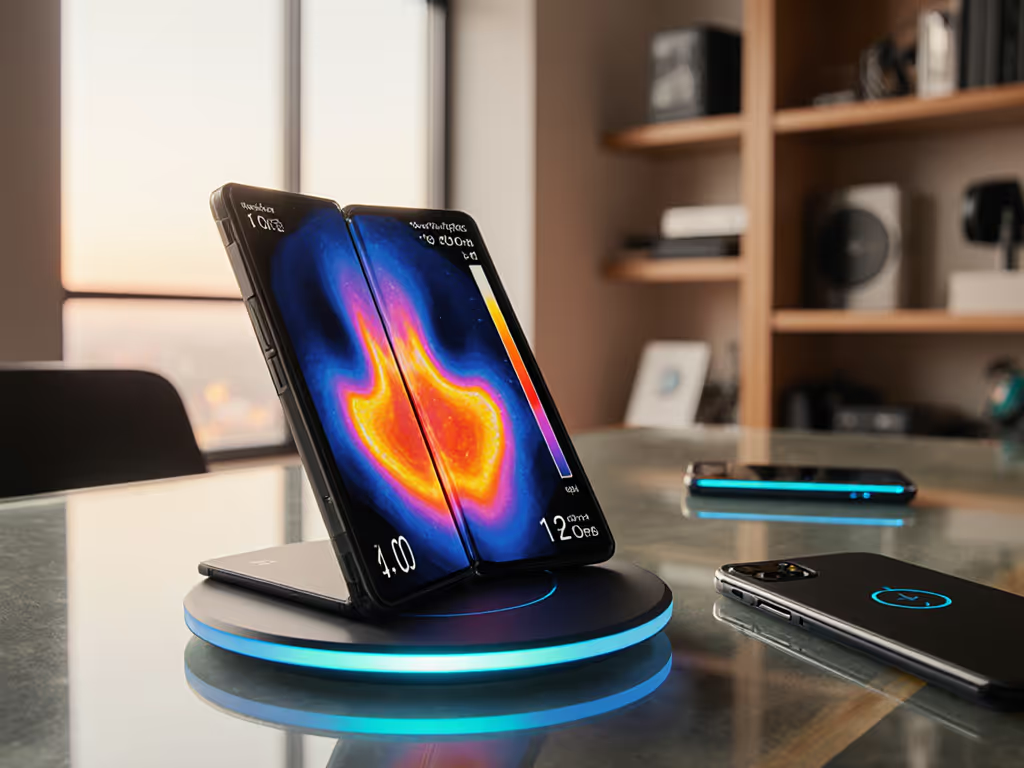
6-Meter Wireless Chargers: RF vs Magnetic Resonance
By Javier Ortiz • 31st Mar
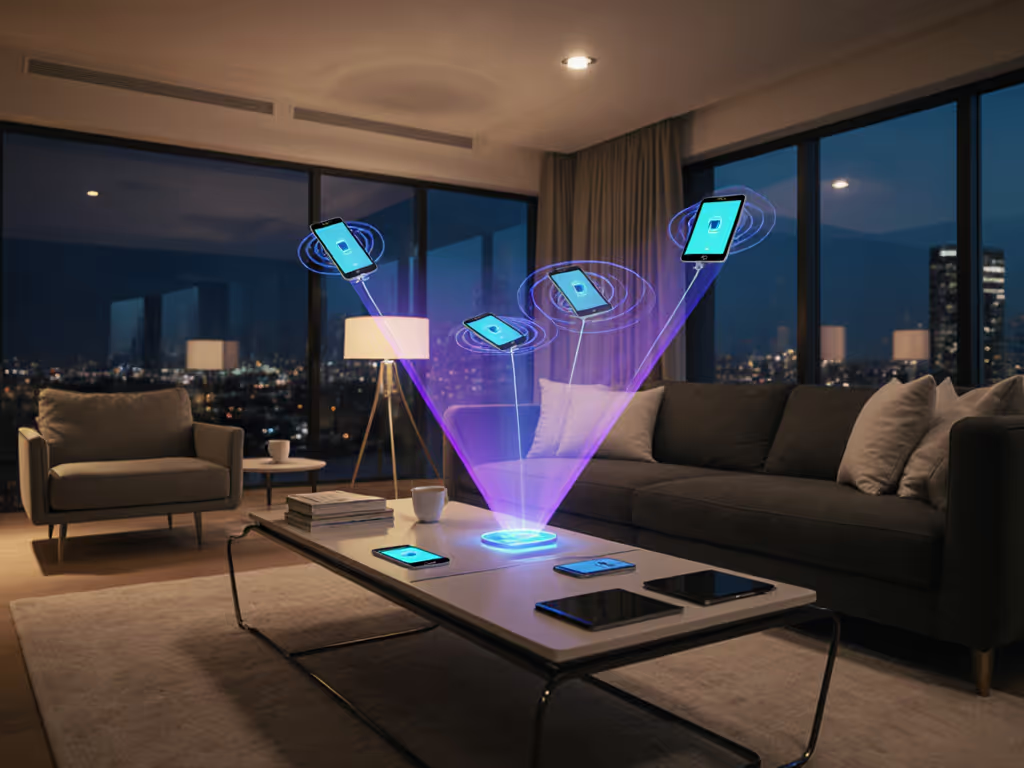
Room-scale wireless charging splits into two distinct paths: magnetic resonance systems that charge nearby surfaces with moderate efficiency, and RF (radio frequency) wireless chargers that trade peak speed for reach, delivering trickle power across entire rooms[3]. Choosing between them isn't about raw specs, it's about designing a charging ecosystem that fits how you actually live and move through space.
I learned this the hard way when a family member asked about installing charging throughout their home office. They'd bought a resonance pad for the desk and an RF receiver for across the room, but neither system was "obvious" to guests or family. No labels, no visual zones, no prediction of where power would or wouldn't reach. When a visitor asked where to set their phone, nobody knew. That's when I realized: distance capability means nothing if people can't navigate the system. The technology is only half the story. Calm spaces emerge when power has predictable, obvious homes.
Understanding the Two Approaches
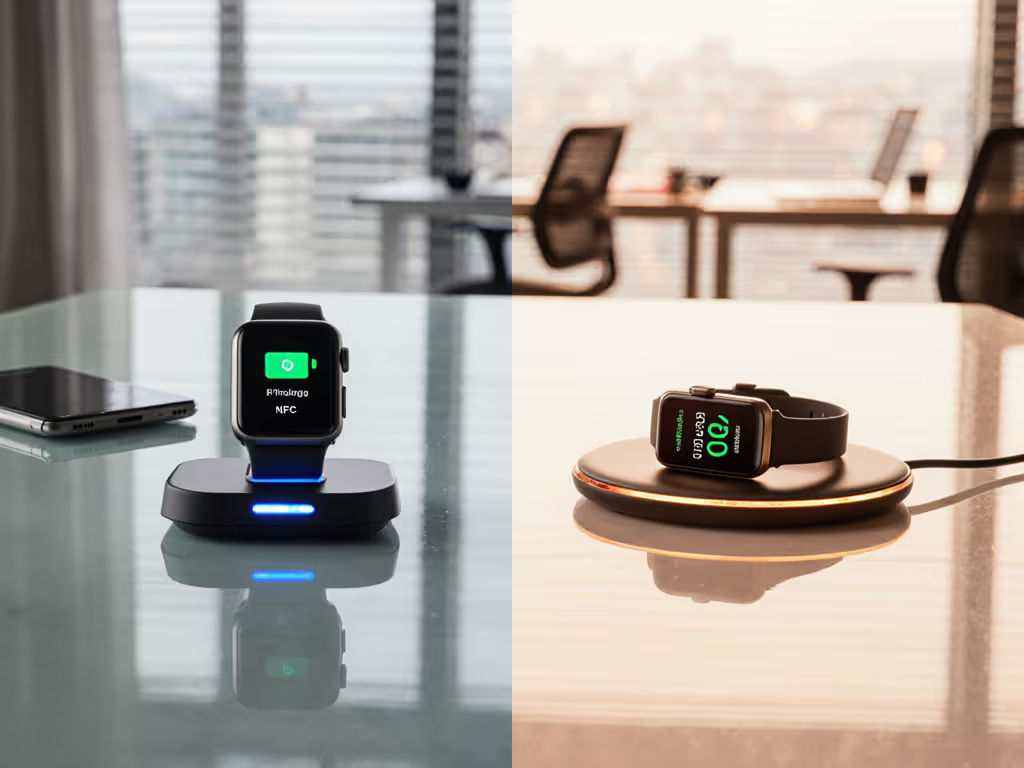
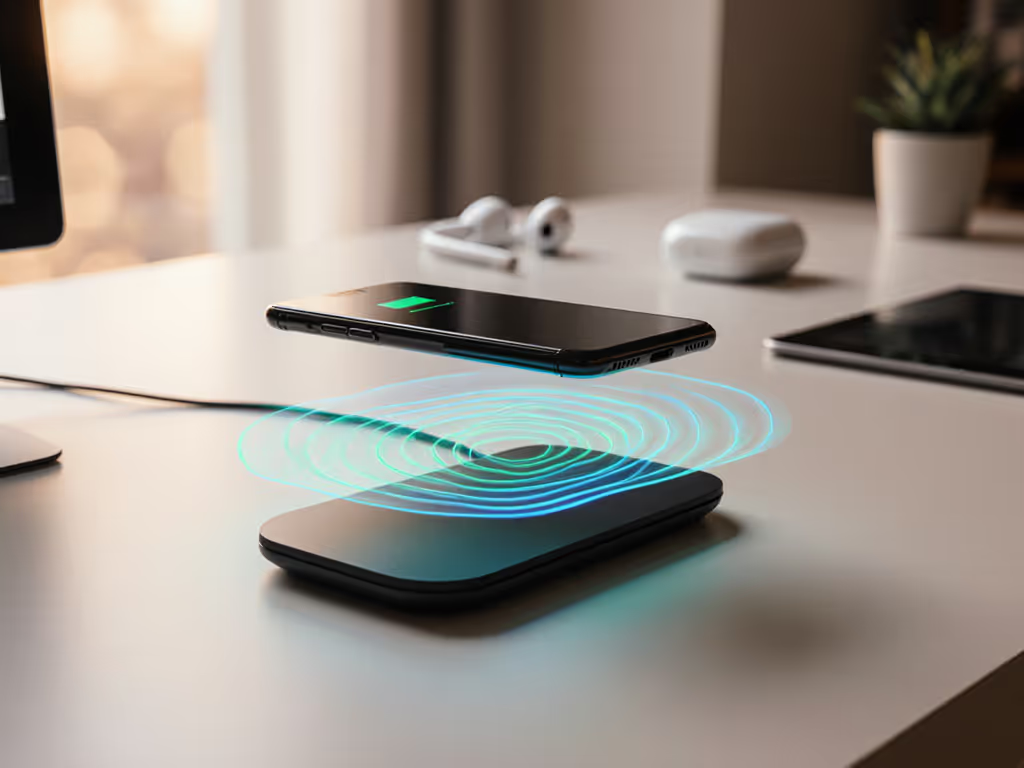
Wireless charging systems work on a simple principle: a transmitter coil creates a varying magnetic field, and a receiver coil picks up that energy[1]. For the physics behind this and where efficiency is gained or lost, see our electromagnetic induction efficiency guide. Where systems diverge is in how tightly coupled those coils are and how far they need to be apart.
Magnetic Resonance: Tight Coupling, Local Range
Magnetic resonance charging uses loosely-coupled electromagnetic systems arranged in fixed zones (typically charging bowls or pads[3]). These systems excel at desktop and nightstand scales: a few centimeters between transmitter and receiver. The tradeoff is reach; they're designed for devices placed directly on or very close to the charging surface.
Why this matters for room-scale thinking: resonance pads are predictable. A guest knows where to put their phone. The visual is unambiguous. You can build a coherent aesthetic, matching materials, minimal cables visible, intentional placement. Efficiency is generally high when alignment is good, and heat generation is moderate because coils don't have to work as hard.
The catch: if someone sets their phone on the nightstand but slightly off the pad, charging stops. The system demands precision from users.
RF Wireless: Loose Coupling, Extended Range
Radio frequency wireless chargers break that rule entirely. To compare room-scale options and real-world range, check our far-field RF wireless chargers analysis. They use uncoupled RF transmission (essentially radiating energy) and can deliver trickle charging over distances of many feet, even across rooms[3]. No precise placement required. No alignment anxiety.
The tradeoff: RF systems are slow. They're designed to maintain battery levels during the day, not to rapid-charge from empty. Heat is lower because power delivery is lower. Efficiency suffers over distance, which is why RF works best for maintaining charge rather than rapid top-ups.
For a room-scale setup, RF shines in bedrooms, living rooms, and home offices where devices can charge passively throughout the day while in use or nearby.
Comparing the Technologies: A System Thinker's Framework
When planning a 6-meter space (think a master bedroom, home office, or open-concept living area), these factors matter:
| Factor | Magnetic Resonance | RF Wireless |
|---|---|---|
| Optimal Distance | 0-10 cm (pad placement) | 1-6 meters (room coverage) |
| Charging Speed | Fast (5-15W typical) | Slow (1-3W trickle) |
| User Friction | High (requires precise placement) | Low (charge from anywhere) |
| Efficiency | 60-80% | 20-40% over distance |
| Heat Generation | Moderate (coil proximity) | Low (spread-out field) |
| Scalability | Multiple pads needed | One transmitter covers room |
| Guest Experience | Clear (obvious dock) | Seamless (charge in place) |
| Installation Complexity | Low (plug and place) | Medium (coil positioning matters) |
| Future-Proofing | Easier (standard Qi2/MagSafe) | Emerging (not yet mainstream) |
Building a Dual-Zone System: The Practical Approach
The smartest room-scale strategy I've found combines both technologies into a tiered charging flow. This is how I'd set it up:
Step 1: Map Your Room's Activity Zones
Before you buy anything, walk your space and identify where people actually spend time and where devices naturally rest:
- Primary Zone: Your desk or work surface (where intensive charging happens)
- Secondary Zone: Nightstand, coffee table, or ambient area (where passive charging is fine)
- Transition Zones: Doorways, hallways, kitchen counter (where trickle power helps but placement is loose)
Make the dock obvious by choosing one of these zones as the "fast charge" hub. This is where magnetic resonance pads should go.
Step 2: Position Magnetic Resonance Pads Strategically
In your primary zone, the desk or focused work area, place a magnetic resonance charging pad[3]. This is your workhorse. High efficiency, fast charging, zero ambiguity about placement.
Label it. Use a consistent color or material around it. If guests are involved, consider a small sign. For a clutter-free primary hub, consider wireless charging desk mats that integrate power into your workspace surface.
Related Articles