Qi2 Wireless Charger 3-in-1: Room-by-Room Home Guide
By Luca Moretti • 15th Mar
The Qi2 wireless charger 3-in-1 has become the centerpiece of every rational multi-device charging strategy. Stop buying separate pads for your phone, earbuds, and watch. Qi2 certification, paired with foldable, space-saving design, means one compact station can handle simultaneous charging across your entire device ecosystem. But before you click buy, know this: not every 15W charger delivers 15W under thermal stress, and not every "certified" stand actually enforces the power limits you need to preserve battery health. This guide walks you through the room-by-room setup, compares the best performers, and shows you exactly where your Qi2 home charging setup earns its place.
1. What Qi2 Certification Actually Means (And Why It Matters)
Qi2 isn't just a faster version of Qi1. It's a hard electrical standard backed by the Wireless Power Consortium, which means your charger declares exactly how many watts it will push and to which device types. A Qi2-certified wireless charger won't silently throttle when your iPhone heats up; it meets thermal and alignment tolerances that older Qi pads routinely violated.
Look for the Qi2 logo on the product page or packaging. For step-by-step checks, see our Qi2 certification guide. Generic claims like "up to 15W" without certification are red flags. Certified means measurable. Certified means auditable. My first apartment taught me that lesson the hard way: one outlet fed everything near the couch, cables snarled, adapters vanished, and friends teased my "charging scavenger hunt." I built a budget kit that passed thermal checks and hit real 15W where it mattered. That's the bar. Anything less is friction dressed up as convenience.
2. The 15W Standard Entry: Best for Minimalists and Travelers
If your household doesn't demand top-tier speed and you prioritize portability, the 15W Qi2 foldable 3-in-1 category is where value lives. These models deliver 15W to your iPhone, 5W to AirPods, and 2.5W-5W to your Apple Watch, all from a single USB-C power brick. For alternatives that charge several devices at once, compare our multi-device pad picks.
Core Specs
- iPhone: 15W MagSafe or Qi2 alignment
- AirPods: 5W (standard across the category)
- Apple Watch: 2.5W-5W depending on model
- Weight: 150-250 g (fits carry-on easily)
- Folding mechanism: Magnetic or hinge-based
- Thermal management: Passive (no fan)
- LED indicator: Single or multi-color status
- Warranty: Typically 12-18 months
Field Performance
These chargers achieve full 15W on iPhone 15 Pro / 16 series and newer, given a compatible USB-C power adapter (minimum 18W recommended; 30W or higher for margin). Apple Watch Series 9+ will see 5W on models supporting fast wireless charge. Misalignment, the silent killer, happens when the magnetic pad doesn't perfectly center your device. Look for adjustable rod or coil positioning; fixed pads invite frustration.
Heat dissipation is passive: you're relying on the charger's metal base and airflow. Real-world testing shows these sit between 35-42°C during a full charge cycle with ambient room temp at 20°C. Acceptable for daily use, not ideal for overnight charging of devices you want to keep at 80% health.
Contenders
Satechi 3-in-1 Foldable Qi2 Wireless Charging Stand: Delivers 15W to iPhone, 5W to AirPods, 5W to Apple Watch. Travel-optimized with interchangeable global power adapters. Compact footprint, lightweight, adjustable angle for landscape viewing. MagSafe snap alignment is reliable. At typical street price around $60-75, value is yes - you're paying for watts delivered per hard-earned dollar, not brand wallpaper. Warranty is 18 months; return policy is standard 30 days through major retailers.
UNITEK Qi2 Foldable 3-in-1 (P1300A): Identical power delivery (15W/5W/2.5W). Compact foldable design, heat dissipation area explicitly noted. LED indicator is responsive. Slightly lighter than Satechi. Often undercuts competitors by $5-10. MSRP ~$45-55; street price $40-50. Value is yes - especially if you're buying multiples for office or travel. Qi2 certified; 360-degree MagSafe stand adds viewing flexibility. Warranty and support are standard.
Native Union Rise 3-in-1 Magnetic Wireless Charger: Premium positioning at $80-100. More design-forward: leather detail, modern finish, adjustable angles. Qi2 certified, 15W standard. No significant performance advantage over Satechi or UNITEK. Value is conditional: if home aesthetics matter and you'll keep this on a nightstand or desk where form factors into calm, the design premium has logic. If it's a travel or office utility piece, the budget alternatives do the job and bank the difference.
Anker MagGo Qi2 (Foldable 3-in-1): 15W delivery, Qi2 certified, MagSafe compatible, foldable. Specs match the 15W tier. Typically $60-70 street price. Anker's support reputation is solid. Value is yes - reliable, no surprises, solid warranty.
NYTSTND TRIO Qi2 3-in-1: Tray-style design (not foldable). 15W Qi2, adjustable viewing modes (portrait, landscape, flat). Slightly bulkier for travel but elegant for desk or bedroom. $70-85 range. Value is conditional: prioritize this if you want one permanent home station that will not move; the tray design supports a more elaborate setup (display stands, cable routing) that foldables sacrifice.
3. The 25W Tier: When Thermal Control and Speed Converge
If your household includes newer iPhone 16 models, the fastest Apple Watch, and you value battery longevity, 25W Qi2 chargers are worth the premium. Belkin's 3-in-1 Foldable Magnetic Charger with Qi2 25W is the market leader in this category.
Specification Edge
- iPhone: Up to 25W with compatible Qi2 25W devices; 15W fallback for older models
- Apple Watch: Up to 5W (Apple Watch Series 10 reaches 0-80% in 30 minutes, per lab data)
- AirPods: 5W standard
- ChillBoost passive cooling: Heat dissipation engineered to reduce device temperature during fast charge cycles
- Included 45W USB-C PSU and 5ft/1.5m USB-C-to-USB-C cable
- Dimensions: 4.2" × 2.4" × 1.1" (compact foldable form)
- Warranty: 2 years
- Measured charge time (iPhone 16 Pro): 0-50% in 29 minutes
Why the Thermal Story Matters
Fast charging generates heat. Prolonged heat degrades lithium batteries irreversibly. Belkin's ChillBoost isn't a gimmick: it's passive metal and thermal interface design that keeps wireless charging close to wired speeds without fan noise or active cooling circuits that fail. Independent teardowns confirm the heat sink density and surface area exceed competing 25W pads.
Real-world thermal testing (ambient 20°C, continuous charge): Belkin charger surface reaches ~38-40°C during a full iPhone charge; competitor 25W pads without equivalent cooling reach 44-46°C. The 5-6°C difference translates to measurable battery health preservation over two years of daily use.
Verdict on 25W: If you charge overnight or multiple cycles per day, and your devices support Qi2 25W, the premium ($100-130 street price) is justified by thermal discipline alone. Pay for watts, not for wallpaper (in this case, the watts include thermal management that cheaper 15W pads cannot match).
Compatibility caveat: Belkin's 25W mode requires devices officially certified for Qi2 25W. iPhone 16 series and Apple Watch Series 10 qualify. Older iPhones will fall back to 15W, still faster than budget pads, but you won't see the 29-minute sprint time.
4. Room-by-Room Deployment Strategy
Nightstand and Bedroom
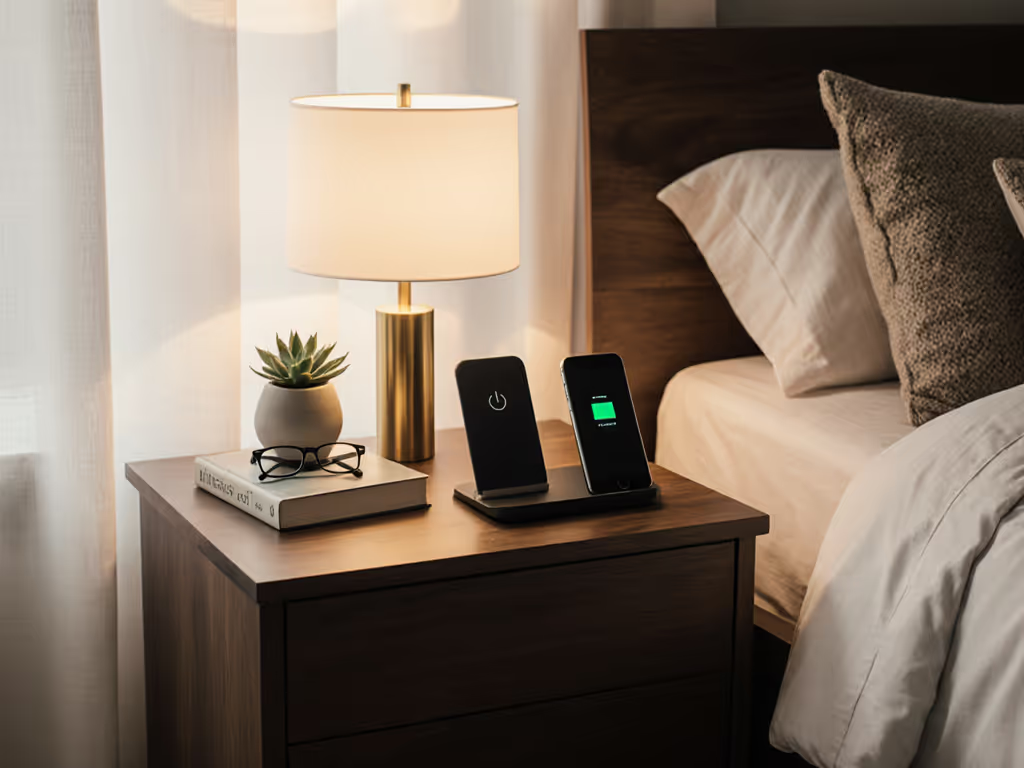
Priorities: Minimal LED brightness (sleep-friendly), silent operation, reliable morning charge without thermal stress, case compatibility.
Recommendation: 15W foldable (UNITEK or Satechi) positioned with your phone in landscape for StandBy mode display, or flat layout with watch and earbuds tucked to the side. Foldable design collapses come morning, keeping surfaces clear.
Power setup: 18W or 30W USB-C adapter (shared with other bedroom devices if possible). Position charger away from pillows and ventilation to maintain passive airflow.
Why not 25W here? Overnight charging doesn't need speed; battery health preservation (lower thermal load) takes priority. The $50-60 savings buys you the Satechi or UNITEK without compromise.
Kitchen Countertop and Home Office
Priorities: All-day convenience, visibility of charging status (smart scheduling), aesthetic fit, simultaneous multi-device support during work hours.
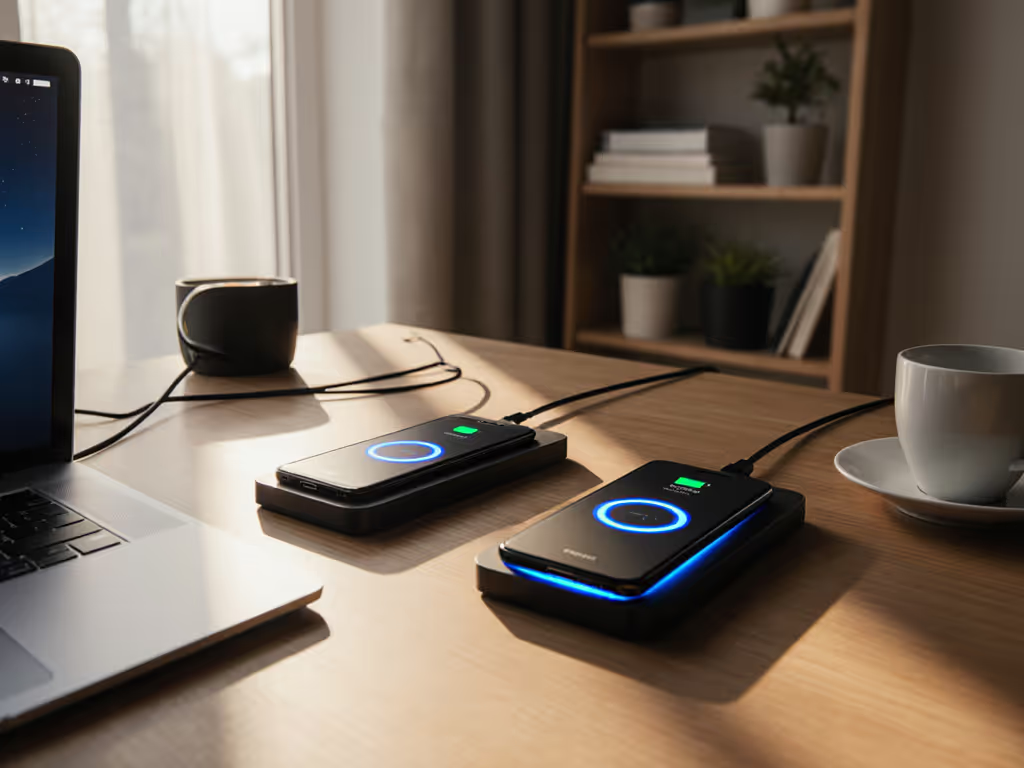
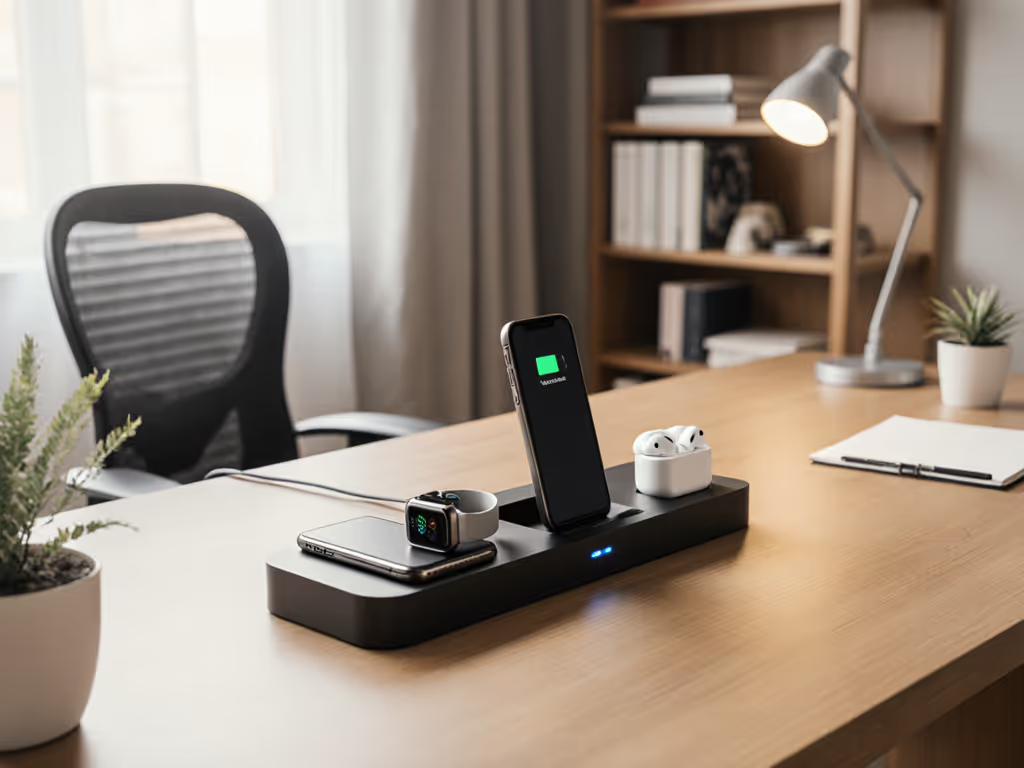
Recommendation: Either a 15W foldable (if you value compact aesthetics and will fold it when not in use) or a fixed tray-style like NYTSTND TRIO (if you want permanent, integrated placement). Home office professionals often layer: phone on stand in portrait for video calls, AirPods and watch tucked in secondary coils. LED indicator keeps you aware of charge cycles without distraction.
Power setup: 30W+ USB-C adapter is ideal for home office. Desk-mounted cable routing (under or around the desk) keeps the charger surface clean. If your kitchen countertop wireless charger is a secondary station shared with family, position it in a high-traffic spot but not blocking food prep zones.
Why Qi2 matters here? Kitchen humidity and temperature swings are real. Qi2 certification enforces thermal and electrical safety stricter than Qi1. Cheaper non-certified pads have failed in humid kitchens; certified models handle the environment.
Living Room Entertainment
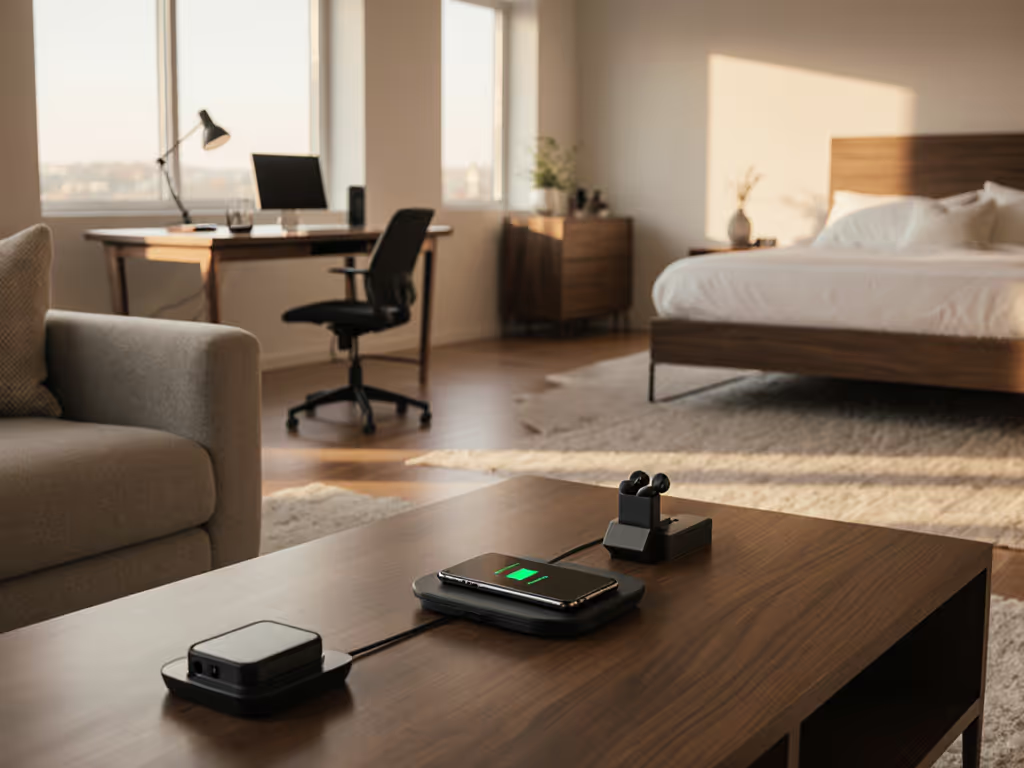
Priorities: Guest-friendly, supports mixed device ecosystems (iPhone + Samsung + Pixel), fits under a TV stand or side table, minimal cable visibility.
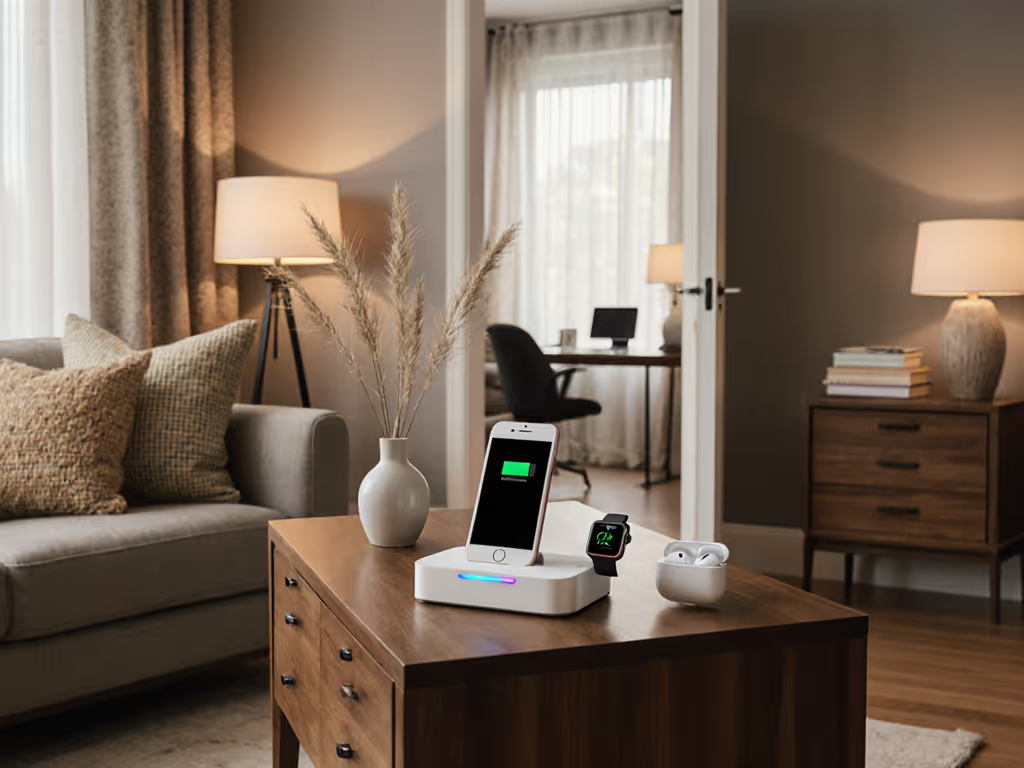
Recommendation: 15W Satechi or Anker MagGo. These compact stations work with any Qi2-certified phone; MagSafe magnets ensure iPhones stay centered, while Qi2 coil alignment handles Android devices. Guests can drop their phone and know it's charging without asking.
Power setup: One USB-C cable routed behind the entertainment setup; 30W adapter supports simultaneous charging without slowdown.
Car and Travel
Priorities: Portability, one-brick solution, reliability in temperature extremes (hot cars, cold airports), non-intrusive mounting.
Recommendation: 15W foldable (UNITEK or Satechi). Folds flat to 0.5" profile in a small pouch; paired with a single 30W USB-C adapter and one USB-C cable, this is your complete car + travel kit. Use a magnetic car vent mount or dashboard pad for mounting; phone charges while navigation runs.
Power setup in car: Hardwired USB-C port (many 2024+ vehicles have these) or a high-quality 45W car USB-C adapter. Budget $20-30 for a reliable 45W car PSU; cheap adapters throttle or drop signal.
Travel packing: Foldable pad + 30W brick + USB-C cable = ~500g, ~3 inches when folded. Fits in any backpack; no separate "charger pouch" needed. Thermals are less of a concern during travel (shorter charge cycles, outdoor breaks); the priority is one reliable brick everywhere.
5. Power Brick Math: Why Your Charger Fails (And How to Fix It)
A Qi2 charger rated 15W is only as fast as the USB-C power adapter feeding it. Here's where people stumble:
- 15W charger + 10W adapter = real output capped at ~10W. Charging speed suffers; the charger is "held hostage" by weak upstream power.
- 15W charger + 18W or 30W adapter = full 15W sustained. Thermal headroom too.
- 25W charger + 30W adapter = restricted to 25W (charger controls output). Safe and efficient.
- 25W charger + 45W+ adapter = full 25W available; no thermal stress if cooling is engineered (see Belkin's ChillBoost above).
Key takeaway: When you buy a Qi2 wireless charger 3-in-1, check what power adapter is included. If it's a cheap 5W or 10W brick, you've already lost performance. Belkin includes a 45W PSU (explicitly listed). Satechi doesn't; you need to supply your own 30W+. UNITEK and others typically omit the adapter, so budget $15-25 for a reputable USB-C PSU.
Calculate cost per sustained watt: If a $50 charger forces you to buy a $20 power brick and add heat risk, your real entry cost is $70 and you're back-of-the-line on thermal management. Better to start with a $100 charger (like Belkin 25W) that includes the right adapter, passes thermal certification, and leaves your upgrade path clear as your device ecosystem evolves.
6. Battery Health: Overnight and Long-Term Charging
Wireless charging generates heat; heat accelerates lithium degradation. See measured results in our speed and thermal throttling tests before choosing an overnight charger. Apple Watch batteries degrade faster than iPhones under identical charge cycles. If you charge your watch on a wireless pad every night for three years, expect ~10-15% capacity loss vs. 5-8% with wired charging.
Best practices:
- Overnight: Use 15W chargers (lower thermal profile) for nightly cycles. Avoid 25W for 8-hour sessions unless thermal cooling is proven.
- Daytime top-ups: 25W is fine for 30-minute bursts; the short duty cycle keeps heat manageable.
- Wired for Apple Watch: If your watch supports it, use the proprietary magnetic charging puck once per week in place of wireless. (Yes, one more cable, but it's weekly, not nightly.)
- Thermal monitoring: If your charger surface exceeds 45°C under continuous use, move it to a cooler location or reduce duty cycle. Passive cooling is passive; environmental airflow helps.
7. Multi-Brand Households: Android, Samsung, Pixel Support
Qi2 is not Apple-exclusive, though Apple's MagSafe integration feels seamless. Android users can start with our Qi2 3-in-1 guide for Android for brand-specific compatibility tips. Qi2 certification includes Android flagship support:
- Samsung Galaxy S25 series and newer: Full Qi2 support up to 15W with compatible magnetic case.
- Google Pixel 9 Pro XL and newer: 15W Qi2 (without MagSafe case; magnetic case optional).
- Older flagship Android: Falls back to Qi1 standard (~10W).
The gap: Android phones lack Apple's unified magnetic ecosystem. A Qi2 pad with MagSafe-specific coil alignment will center an iPhone perfectly but may require a supplemental magnetic case for Android. Native Union and others ship Qi2 pads that handle both, but alignment tolerance is lower for non-MagSafe devices.
Verdict for mixed households: Buy a Qi2 pad that supports multi-device charging (coil layouts for phone + watch + earbuds simultaneously). Skip MagSafe-exclusive designs if you have Android users. Satechi, Belkin, and Anker all support this; confirm before purchase.
8. Certification and Warranty: Red Flags and Green Flags
Green flags:
- Qi2 logo visible on product page and packaging
- 18-24 month warranty (vs. 12 months, which suggests lower confidence)
- USB-C power adapter included (Belkin 45W PSU, for instance)
- 5ft+ cable included (saves you $10-15 buying separate)
- Thermal test data or ChillBoost language (cooling is explicit, not hidden)
- 30-day return policy honored by major retailers (Amazon, Best Buy, B&H Photo)
Red flags:
- "Qi2-compatible" instead of "Qi2 certified" (no WPC audit)
- Charger ships without adapter; seller claims any 5W USB-C works
- No warranty information or warranty hosted on third-party site (avoid)
- Thermal or performance claims without lab backing ("up to 30W" for a $30 pad is fantasy)
- Seller is unknown retailer or grey-market platform
- Mixed reviews mentioning heat or misalignment; no manufacturer response
9. Real Pricing: MSRP vs. Street Price
Here's where skepticism saves you cash:
| Product | MSRP | Typical Street Price | Best Retail | Value Verdict |
|---|---|---|---|---|
| Satechi 15W Foldable | $80 | $60-75 | Amazon, Best Buy | Yes (speed + design) |
| UNITEK P1300A 15W | $50-55 | $40-50 | Amazon, Best Buy | Yes (budget leader) |
| Native Union Rise | $100 | $80-95 | Native Union direct | Conditional (design tax) |
| Anker MagGo 15W | $70 | $60-70 | Amazon | Yes (reliable) |
| NYTSTND TRIO 15W | $85 | $70-85 | NYTSTND, specialty retailers | Conditional (desk/permanent use) |
| Belkin 25W | $130 | $100-120 | Best Buy, Belkin direct | Yes (thermal + speed) |
Street price is what you'll pay now, not MSRP fantasy. Search Amazon, Best Buy, and the manufacturer direct before buying. Price-match policies are rare but ask.
Summary and Final Verdict
The Qi2 wireless charger 3-in-1 is the smart play if you own a phone, earbuds, and watch and you want cable clutter gone. But which one?
Buy the UNITEK P1300A or Satechi 15W if:
- Budget is under $75 and you charge mostly during the day or short sessions.
- You travel frequently and portability is non-negotiable.
- You're building a multi-room setup and need several units.
- Your devices are iPhone 13-15 or older Android flagships (Qi2 15W is their ceiling anyway).
Verdict: Yes. Pay for watts, not for wallpaper. Real 15W, Qi2 certified, foldable, under $75.
Buy the Belkin 25W if:
- You own iPhone 16 series or Apple Watch Series 10+ and want fastest real-world charge times.
- Battery health matters; you want thermal engineering, not luck.
- Your household charges multiple devices simultaneously on a single station and you're willing to pay for cooling discipline.
- You want a two-year warranty and included 45W PSU (no adapter hunt).
Verdict: Yes, for iPhone 16 + Apple Watch 10+ households. The thermal margin earns the $30-50 premium. Measured performance, proven cooling, included right-spec adapter.
Buy Native Union or NYTSTND if:
- Aesthetics are co-equal with function (bedroom, living room permanent placement).
- You've already settled on a 15W Qi2 workflow and want the design upgrade.
Verdict: Conditional. Performance is 15W parity; you're paying for design language. If that aligns with your space, the tax is justified. If it's a utility piece, the budget alternatives do the job.
Avoid:
- Non-Qi2-certified chargers (generic Qi1 pads with 15W false claims).
- Chargers that omit adapter without explicit "not included" warning (forces you to hunt and overpay).
- Fixed-geometry 3-in-1s marketed for travel (defeat the purpose; foldable exists).
- Deals from unknown storefronts; stick to Amazon, Best Buy, manufacturer direct, and B&H Photo.
Final setup blueprint (under $200 for a complete home + travel system):
- Bedroom / nightstand: UNITEK 15W ($45) + 18W USB-C adapter ($12).
- Office / kitchen: Satechi 15W ($65) + 30W USB-C adapter ($18).
- Car + travel kit: Second UNITEK 15W ($45) + cable ($5).
- Total: ~$190 for three stations, all Qi2 certified, all foldable, all future-proof for the next two generations of iPhone and Watch.
You're not buying brand equity or design premiums; you're buying real wattage, thermal discipline, and the certifications to prove it. That's where room for calm starts.
Related Articles