Qi2.2: How Magnetic Alignment Enables Safe 25W
By Luca Moretti • 7th Mar
Wireless charging has long promised convenience, but delivery lagged behind the hype. Misalignment, heat, and throttling plagued earlier standards (until now). The Qi2.2 wireless charger standard represents a genuine leap, pairing a 25W power ceiling with precision magnetic guidance that keeps devices cool and charged fast. But here's what matters most: the real-world safety and efficiency gains stem not from raw wattage alone, but from how magnetic alignment and thermal management work together. Understanding this difference separates smarter buys from expensive mistakes.
Why Magnetic Alignment Changed Everything
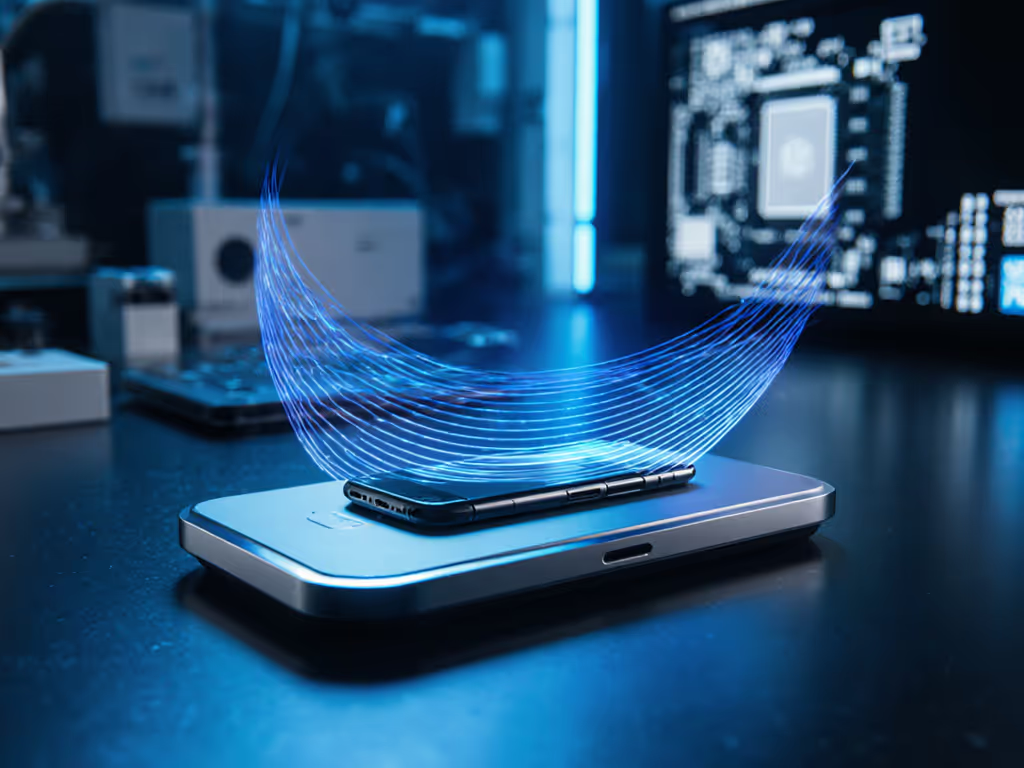
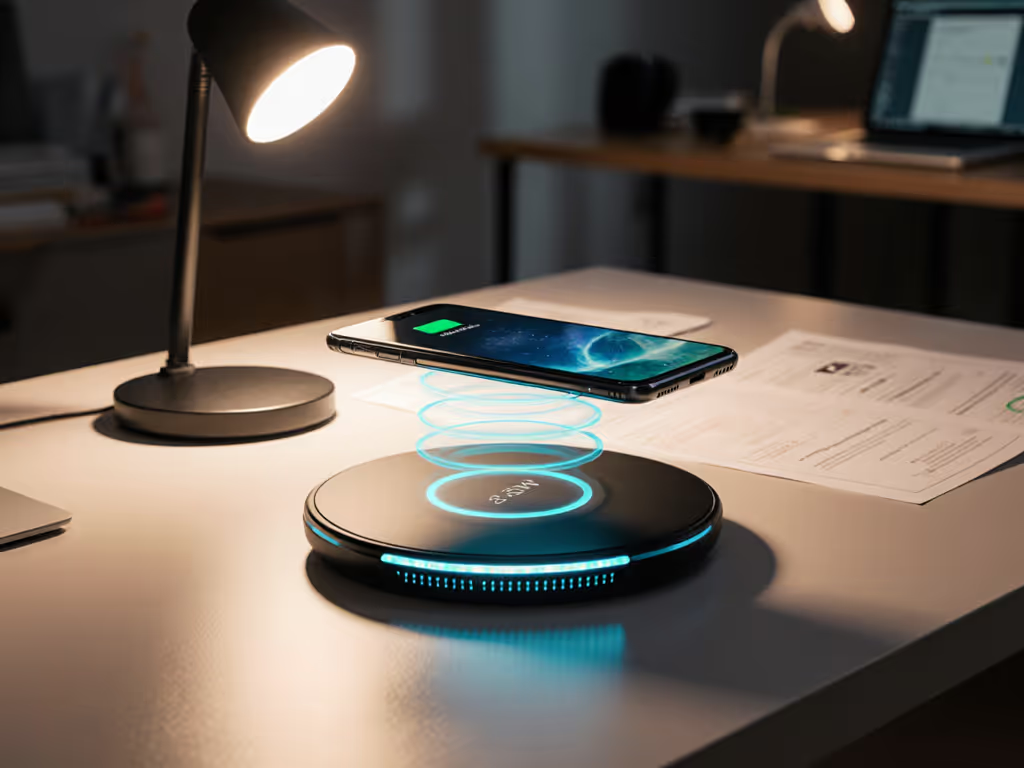
For years, wireless charging felt temperamental. You'd place your phone on a pad, and within seconds the charging speed would drop or the device would warm up. The culprit: coil misalignment. Even a few millimeters of drift reduced electromagnetic coupling, forcing the charger to waste energy as heat. Magnetic Power Profile (MPP), refined in Qi2.2, solves this with alignment tolerance of approximately ±0.5mm. This isn't marketing polish, it's physics.
When coils align within that tight window, resistive losses drop sharply. The charger can sustain full 25W output without overheating, and your device stays cool even during intensive use like navigation or video streaming. Compare this to older Qi2.0 pads (which operated at 87-205kHz), and Qi2.2's 360kHz frequency becomes a real advantage. The higher frequency enables four times faster data transmission between charger and device, meaning quicker power negotiation and fewer thermal spikes.
The magnetic guidance itself isn't new (Apple introduced it via MagSafe), but Qi2.2 standardizes and refines it. If you're deciding between Apple's system and open standards, read our MagSafe vs Qi comparison. Built-in magnets in cases and charger pads keep the device centered without fiddling. For anyone who's ever fumbled with a nightstand pad or a car mount (or watched a phone slowly slide off an unaligned pad), this alone justifies the upgrade.
Power Delivery: 25W, but Not Without Rules
Qi2.2 maxes out at 25W, a 67% jump from Qi2.0's 15W. That's the headline. But actual performance hinges on your power brick, your device, and your charger's design.
To deliver full 25W, Qi2.2 chargers require a USB-C Power Delivery adapter rated at 30W or higher; multi-device chargers may need 40W or more. That detail matters, because many households buy a fancy new qi2.2 wireless charger only to pair it with an underpowered 18W brick in the drawer. Result: throttling, slower real-world charge times, and a sense of wasted money, the kind of oversight that feeds buyer regret.
Here's the practical math. A typical flagship phone has a ~4,000mAh battery. Wireless 25W charging fills it roughly 30% faster than 15W, all else equal. In morning-rush or work-break scenarios, that's meaningful. But heat is the trade-off. Higher power = higher electromagnetic losses unless alignment and coil design are flawless. That's why Qi2.2's alignment spec matters more than the wattage number alone.
Value shows up in watts delivered per hard-earned dollar, and wasted watts generate heat that ages batteries faster.
Thermal Management and Battery Longevity
Battery wear is invisible until it's too late. Lithium-ion cells degrade faster at elevated temps, and wireless charging has always run warmer than wired charging due to energy conversion losses. Qi2.2 doesn't eliminate this; it minimizes it.
The standard uses advanced circuit design and real-time energy management algorithms to monitor charging status and adjust output power dynamically. When your phone's battery is low, the charger delivers full 25W. As it approaches full capacity, output tapers, protecting the battery from overcharging stress. Enhanced coil materials and optimized magnetic coupling reduce energy loss during transmission, and improved foreign object detection prevents accidental metallic interference that would spike heat.
Foreign object detection in Qi2.2 is sensitive enough to catch metallic debris or a coin sliding under the pad, shutting down before damage occurs. This is particularly relevant in cars or on desks where pockets, keys, and loose change pose real risks.
Temperature monitoring prevents overheating by limiting power output the moment the device exceeds safe thresholds. You won't see a fan-cooled charger (those are rare and loud), but the firmware-level throttling is reliable and transparent to the user. All of this adds up to slower degradation of battery health over months and years, something cheaper, hype-driven chargers simply don't do. Want independent data on sustained 25W performance? See our Qi2 25W thermal throttling tests.
Multi-Device Charging: Smart Power Sharing
Households with iPhones, AirPods, Apple Watches, and Android devices face fragmentation. A Qi2 wireless charger 3-in-1 (pad with three coils, for instance) sounds ideal, but only if power allocation works intelligently.
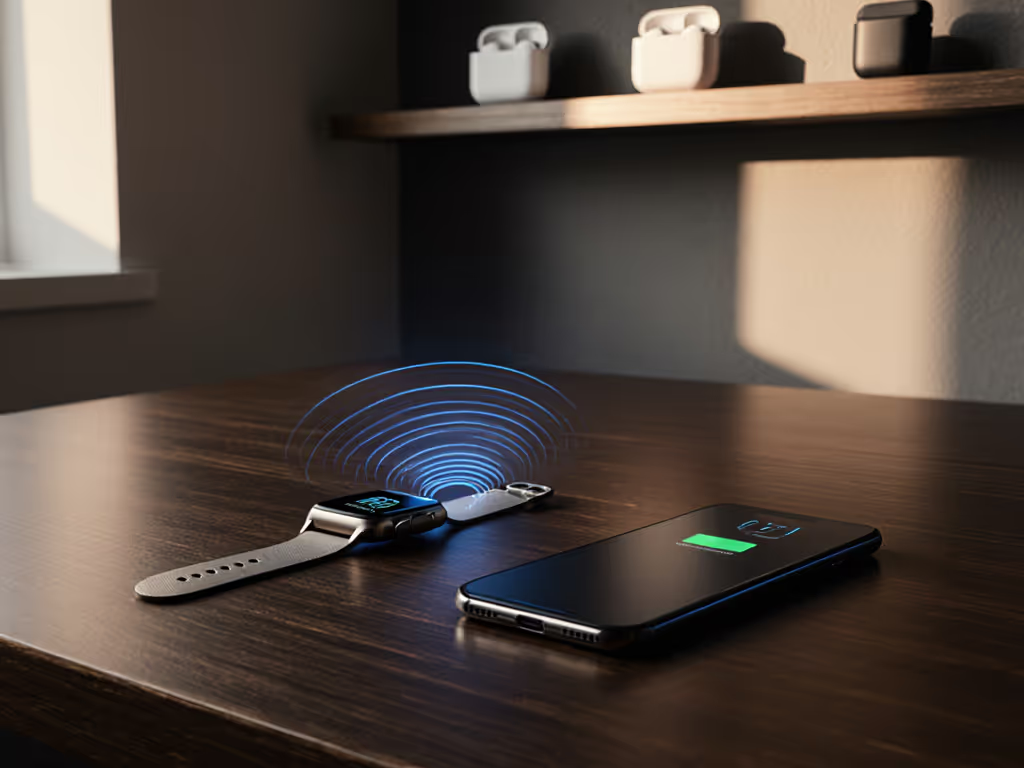
Qi2.2 introduces advanced power allocation technology. The charger identifies each connected device and distributes power dynamically, prioritizing devices with lower battery levels. If you place a phone (40% battery), earbuds (10% battery), and a watch (80% battery) on a multi-device pad, the charger feeds the earbuds and phone first, then shifts resources as batteries fill. This avoids the frustration of one device trickling at 2W while another charges at 12W.
For this to work, the charger and all devices must support Qi2.2. For a deeper standards comparison, see our Qi2.2 vs Qi2 technical breakdown. Backward compatibility is built in, and Qi2.0 devices still charge on Qi2.2 pads, but at Qi2.0 speeds (max 15W).
Comparative Snapshot: Qi2.0 vs. Qi2.2
| Aspect | Qi2.0 | Qi2.2 | Real Impact |
|---|---|---|---|
| Max Power | 15W | 25W | ~30% faster early-stage charging |
| Alignment Tolerance | Varies | ±0.5mm (MPP) | Consistent performance, reduced heat |
| Operating Frequency | 87-205kHz | 360kHz (MPP) | 4x faster device negotiation, fewer spikes |
| Multi-Device Allocation | Basic | Smart & dynamic | Balanced charging for mixed ecosystems |
| Foreign Object Detection | Standard | Enhanced | Better safety margin on desks & cars |
| Power Adapter Required | 18W-24W | 30W+ (40W+ for multi-device) | Must buy correct brick, don't assume |
| Backward Compatibility | N/A | ✓ Full | Old devices work; new speed benefits require Qi2.2 devices |
Backward Compatibility: Old Devices, New Chargers
A Qi2.2 charger will power a Qi2.0 or older Qi device at the device's maximum supported level. An older iPhone using Qi1.x will charge on a Qi2.2 pad, but capped at ~5W. This means buying a new Qi2.2 charger doesn't strand your existing gear. However, the inverse is not true: a Qi2.0 charger cannot deliver Qi2.2's 25W to a new device, even if the device is certified for it. Skip the hype tax by understanding this asymmetry, which protects your choice to upgrade pads without forcing device changes, but also means old chargers won't unlock new device benefits.
Practical Applications: Room by Room
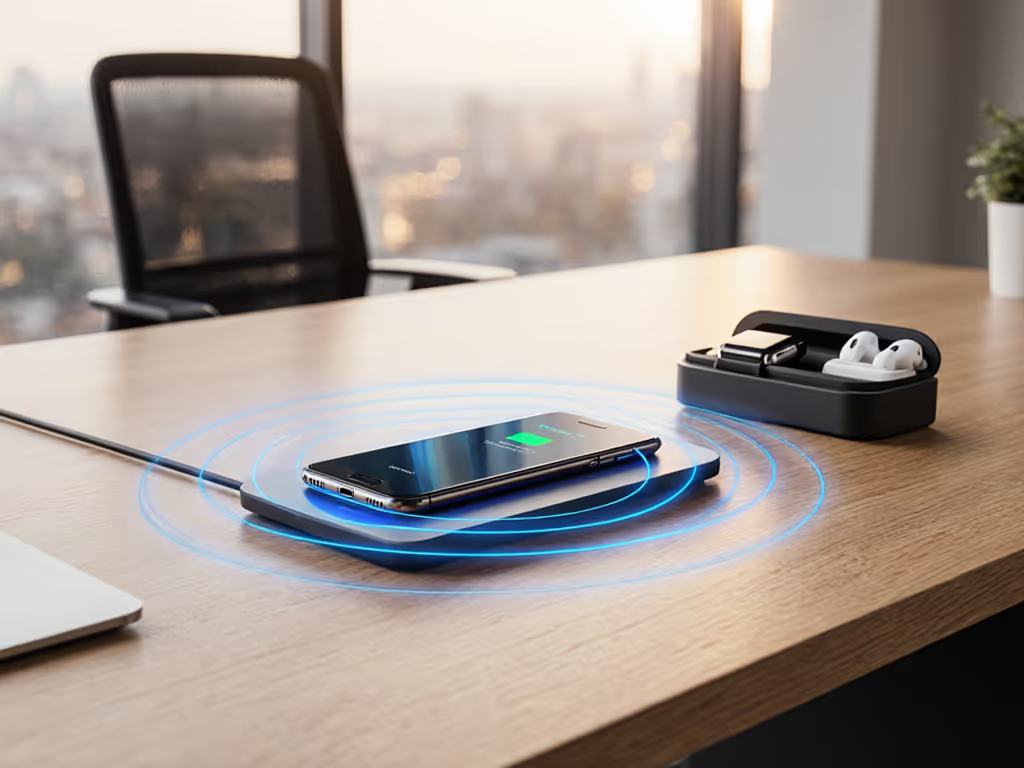
Nightstands & Desks: Magnetic alignment and reduced heat make Qi2.2 ideal for always-on charging near sleep. No more worrying about a device drifting into a hot spot. The ±0.5mm snap-in also means one-handed placement in dim lighting, a small luxury that adds up over months.
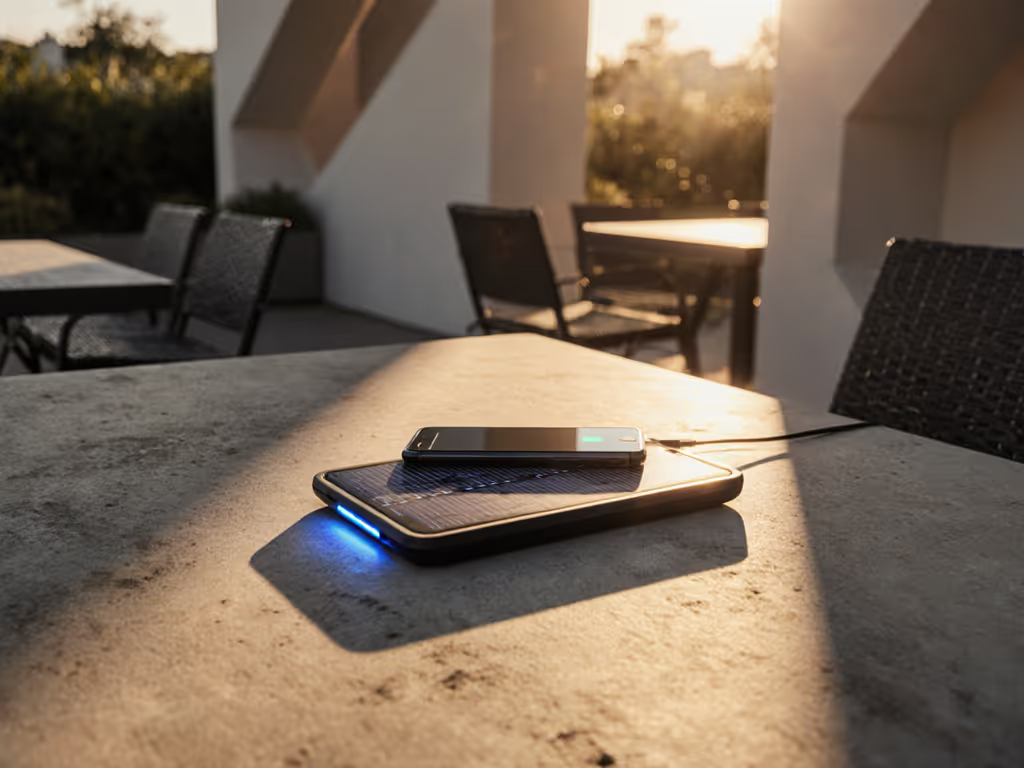
Car Mounts: Auto wireless chargers using Qi2.2 stabilize in-vehicle charging. Precise alignment keeps coils centered despite road vibration, preventing the dreaded mid-drive slowdown. Coupled with thermal management, heat (a major pain point in closed-cabin cars) stays controlled even in direct sun or during navigation-heavy trips. For mounting best practices and safety trade-offs, check our vent vs dashboard mount comparison.
Multi-Device Travel Kits: A compact auto wireless charger or 3-in-1 pad with Qi2.2 and smart power allocation collapses the cable and brick sprawl. Instead of three USB-C chargers and a watch puck, you pack one 30W-40W adapter and one multi-coil pad. For frequent flyers and road warriors, this is a material convenience upgrade.
The Catch: You Need the Right Power Brick
Qi2.2 is only as fast as your power adapter. A 25W charger pad plugged into an 18W brick will throttle to ~15W. A multi-device Qi2.2 pad (promising 25W per device) requires 40W or more of USB-C PD input; anything less, and it shares and rations. Check the fine print on the product spec sheet, not marketing images. If the box doesn't list the required adapter wattage, that's a red flag.
The other often-overlooked detail: coil count and layout. A single-coil Qi2.2 pad isn't the same as a 3-in-1; single-coil hits 25W easier because all power goes to one device, whereas 3-in-1 must split and manage simultaneously. For a crowded nightstand or office desk, single-coil simplifies the trade-off.
Energy Efficiency and Eco Impact
Qi2.2 reduces standby power consumption through advanced power management chips and intelligent control circuits that minimize waste when no device is connected. Compared to older pads that drew steady 2-5W in idle, Qi2.2 chargers may draw <0.5W in low-power mode. Over a year of 24/7 standby, that's a modest but real utility-bill difference, especially for a household running multiple pads.
The efficiency gains also cut into heat, which extends coil lifespan and reduces thermal noise (fan wear in active-cooled designs). For a product you'll use daily for 3-5 years, that durability pays dividends.
Actionable Next Steps
- Step 1: Audit your devices. Identify which phones, watches, earbuds, and tablets you own and whether they're Qi1.x, Qi2.0, or ready for Qi2.2. Check product specs or contact manufacturers if uncertain.
- Step 2: Calculate your power needs. Single-device charger? 30W USB-C PD brick is sufficient. Multi-device (phone + watch + earbuds)? Budget for 40W. Write this down; it's your baseline for comparison shopping and a check against underpowered hand-me-down bricks.
- Step 3: Prioritize alignment and thermal specs. When evaluating chargers, look for explicit mention of Magnetic Power Profile (MPP), ±0.5mm alignment tolerance, and certifications from the Wireless Power Consortium. Chargers listing "Qi2.2 certified" are audited; others are not. Learn how to spot genuine products in our Qi2 certification verification guide. Beware of vague claims like "25W capable" because that's not the same as certified.
- Step 4: Plan by room and use case. Nightstand? Prioritize quiet, low-profile single-coil. Car? Choose a secure mount with proven thermal stability. Travel? Opt for a validated 3-in-1 with a compact 40W GaN adapter and one quality USB-C cable. Buy once with the right specs, and you'll avoid the charging scavenger hunt of mismatched adapters and slow fall-backs.
- Step 5: Check warranty and return policy. Real Qi2.2 chargers come with 1-3 year manufacturer warranties and 30-day returns. If a retailer or product avoids publishing these, walk. Counterfeit and gray-market chargers lack support, and you'll be stuck with a paperweight if alignment fails or thermal protection activates.
Qi2.2 is a genuine upgrade: faster charging, smarter alignment, and better safety. But the gains only materialize if you buy the right wattage, understand the backward-compatibility boundaries, and match it to your device ecosystem. Smart spending means buying the right wattage once, and Qi2.2 finally makes that possible without the heat anxiety and alignment roulette of older standards.
Related Articles