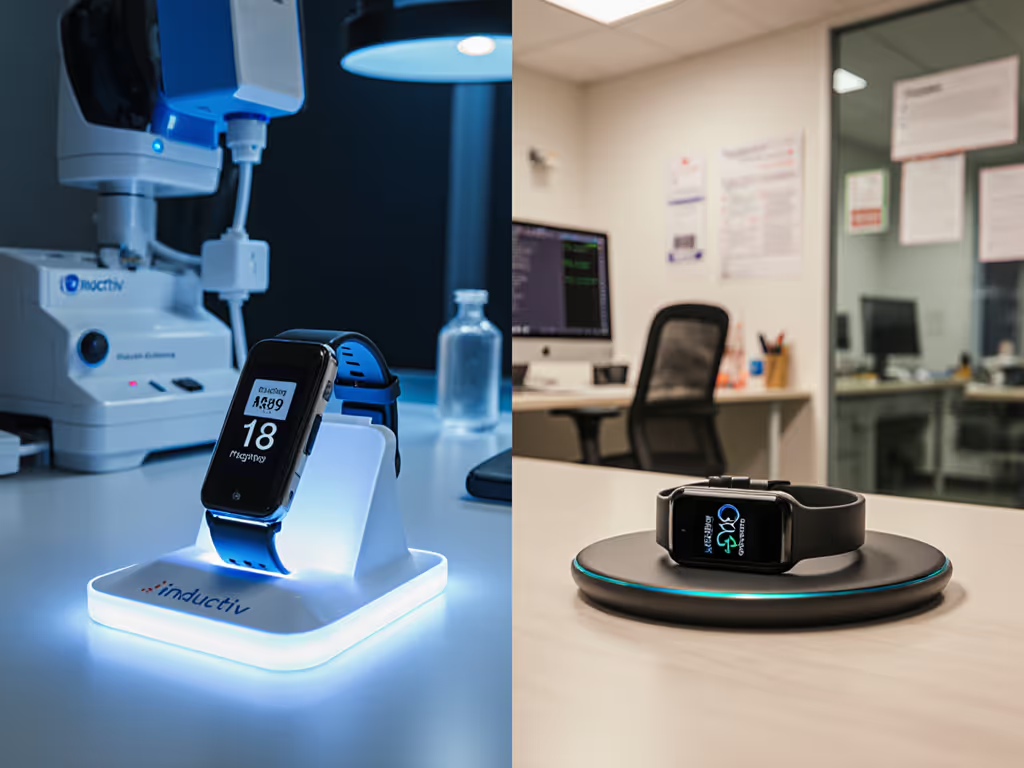
NFC Wireless Charging 2.0: Wearable Power Explained
By Javier Ortiz • 15th Feb
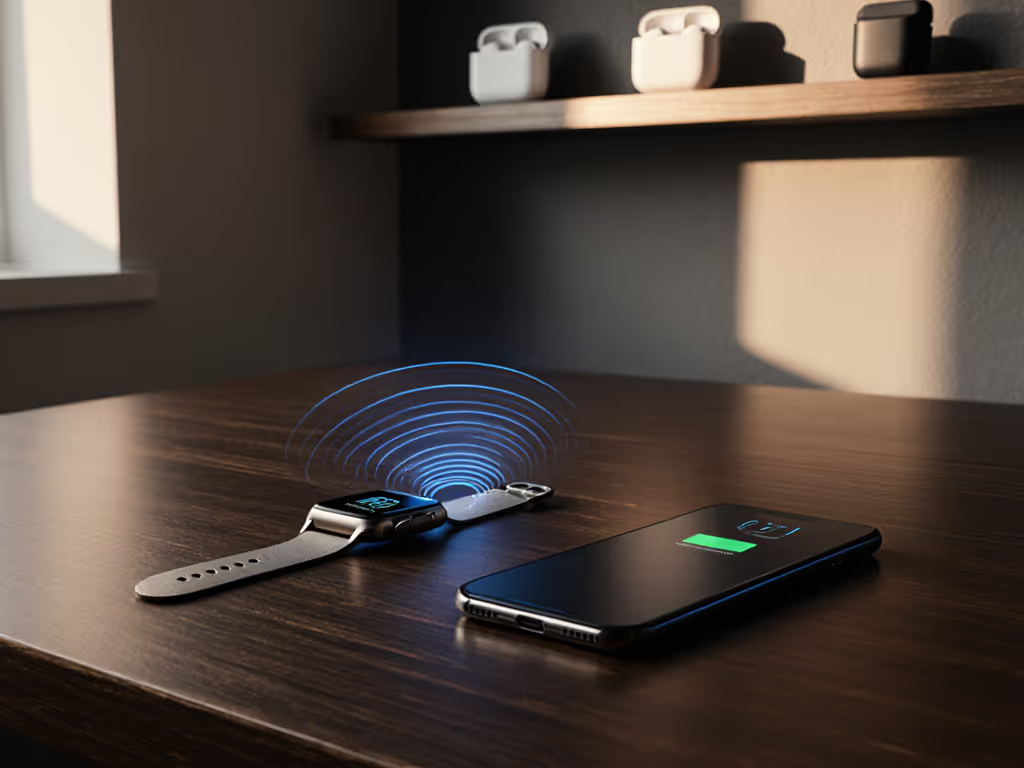
NFC wireless charging 2.0 is reshaping how your smallest devices (earbuds, smartwatches, fitness trackers, and stylus pens) stay powered without ever touching a cable. Rather than the bulky inductive coils that dominated wireless charging for years, the new NFC WLC specification uses your phone's existing antenna to send power and data together, unlocking thinner, more durable designs and a charging ecosystem that finally feels unified. For a technical deep dive into low-watt NFC power transfer for rings and sensors, read our NFC power guide.
For professionals and families juggling multiple devices across rooms and on the road, this shift matters deeply. The fragmentation is real: your watch charges on one proprietary puck, your earbuds live in a case with a microUSB port, and your smart ring (if you own one) might not charge wirelessly at all. If you're considering a ring, our smart ring charging guide explains practical charging options and what to look for. By 2026, NFC wireless charging is poised to move from niche experiment to mainstream standard, but only if you understand what it solves and where it fits alongside Qi2 and traditional wireless pads.
The Problem: Fragmentation and Friction
Today's wearable charging landscape feels like building with mismatched parts. Each accessory (whether Apple Watch, AirPods Pro, Oura Ring, or Google Pixel Watch) often demands its own dock, cable, or proprietary connector. Your nightstand becomes a cable tangle. Your travel bag bulges with adapters. And every time you upgrade a device, you risk buying the wrong charger all over again.
More quietly, the physics works against small devices. Traditional wireless charging (inductive systems like Qi) requires relatively large coils, typically designed for phones and tablets. Squeezing that into a smartwatch band or earbuds case creates thermal headaches, slowed charging, and wasted battery health. Ports solve the power problem but sacrifice durability: water seeps in, connectors wear out, and your beloved fitness tracker becomes a liability after a year of gym sweat and shower steam.
The Agitation: Why Standards Matter More Than Specs
When you're researching charging solutions for your home or office, you quickly hit decision paralysis. Should you wait for Qi2? Stick with Qi? Invest in proprietary Apple or Samsung ecosystems? What about NFC? Is it real, or just vaporware?
The honest answer: each standard serves a different power range. Qi and Qi2 dominate smartphones, tablets, and high-power devices. They're mature, certified, and proven. But they're overkill for a smartwatch that sips a watt or less, and their antenna footprint is too large for the ultra-small form factors that manufacturers now crave.
That's where the anxiety deepens. You buy a premium wireless charging pad for your phone, thinking it's future-proof. Two years later, your new earbuds, ring, and stylus pens don't align with it. They need a different charger entirely. Your nightstand, which was supposed to be clean and calm, becomes a drawer of orphaned docks. And the real cost isn't just the extra hardware; it's the decision fatigue and the creeping sense that your setup is already obsolete.
The Solution: Unified Low-Power Charging Through NFC
NFC wireless charging 2.0 reframes the problem. Instead of building a new antenna into every wearable, it leverages the NFC antenna already in billions of devices (your smartphone, tablet, or laptop). That antenna already handles secure communication (payments, sharing). The innovation: it can now handle power transfer too.
Here's what that unlocks:
Smaller Devices, Longer Durability
Because NFC antennas are tiny and flexible (bendable PCBs, not rigid coils), manufacturers can finally design wireless earbuds without chunky charging cases, smartwatch bands with zero ports, and digital styluses that last years instead of months. Removing charging ports dramatically improves IP ratings and water resistance, which directly benefits health trackers, fitness devices, and outdoor wearables exposed to sweat and rain.
I learned this truth years ago while designing a guest room for my parents. I realized they weren't anxious about specs; they were anxious about breaking something unfamiliar. When I mapped zones for each device and labeled what went where, using matching materials and obvious landing spots, my father docked his phone on the first try. He exhaled. That clarity mattered more than raw wattage. The same principle applies here: if your earbuds or watch can charge on the same pad or dock as your phone (or directly from your phone in a pinch), the cognitive load drops to zero.
Communication Meets Power
Unlike simple inductive charging, NFC merges data and power. Your device can negotiate the exact charge it needs, authenticate itself to prevent counterfeits, and send feedback to your phone. That means smarter charging curves, better thermal management, and ecosystems locked to premium, secure experiences. For large organizations or Apple and Samsung ecosystems, this is powerful: accessories certified, aligned, and trusted.
For you, it means fewer counterfeit chargers clogging your drawer and more confidence that a branded ecosystem "just works."
Cost-Efficient Integration
For manufacturers, reusing an existing antenna and avoiding complex thermal shielding cuts component costs and time-to-market. Those savings eventually flow to you as lower prices for premium wearables and a faster pace of innovation.
Mapping Your Zones for NFC-Ready Charging
The standard launched in 2021; serious ecosystem adoption begins this year. Here's how to think about placement and setup as NFC wearables enter your home:
Nightstand. This is the guest-friendly zone. If your phone, watch, and earbuds can all charge in a single, compact dock (silent, no LED glare, magnets that feel confident), calm spaces emerge when power has predictable, obvious homes. Map your zones. For options that consolidate phone, watch, and earbuds, see our multi-device charging pads. NFC makes this feasible because no device needs a proprietary puck.
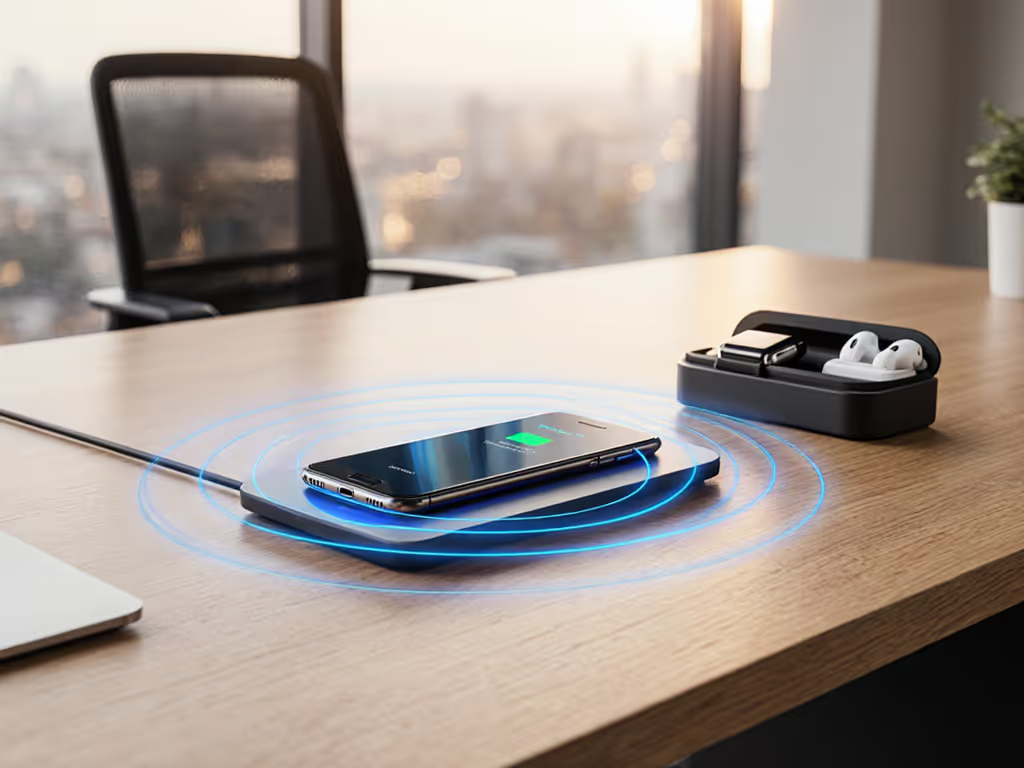
Desk and Workspace. A single multi-device pad or vertically stacked docks consolidate cables. With NFC, your earbuds and smartwatch share the same charging substrate as your phone. Fewer bricks, fewer cables, less visual clutter.
Car Mounts. NFC chargers can be embedded into dashboard or ventilation mounts without the thermal load of inductive coils. For mounting and safety trade-offs, see our vent vs dashboard mounts. Your watch or earbuds charge while you navigate, and the mount stays cool even in summer heat.
Travel Kit. This is where NFC shines. Instead of a phone pad, a watch dock, and earbuds case (three separate items), one compact NFC mat or pad can trickle-charge all three devices. One power brick, one USB-C cable, one cable routing path. The reduction in friction is profound.
NFC WLC 2.0 and the Broader Ecosystem
One caveat: NFC wireless charging is not a replacement for Qi2. Think of it as complementary. Qi2, with its magnetic alignment and higher power delivery, will continue to dominate smartphones and tablets. NFC fills the gap for ultra-low-power wearables (earbuds, rings, styluses, smart jewelry, medical patches, and fitness sensors).
By 2026, expect semiconductor suppliers, accessory makers, and major phone brands to integrate NFC charging into next-generation wearables. Early movers (companies like Apple, Samsung, and premium hearable brands) will lock in ecosystem advantages. That means proprietary docks and seamless integration within their platforms.
For you, the practical takeaway: new wearables you buy in 2026 will increasingly support NFC charging. Older devices (your current AirPods Pro, for example) will still need their legacy chargers. But anything new should factor in NFC WLC compatibility as a standard feature, much like Qi2 magnets are becoming a baseline for high-end phones.
Future-Proofing Your Setup
If you're rebuilding your charging ecosystem this year, adopt a modular, standards-based approach:
- Verify certification. When you buy a multi-device pad or dock, check that it's NFC Forum-certified and explicitly supports Class 6 antennas (the broad compatibility standard).
- Choose flexible form factors. Look for mounts, pads, and stands that can accommodate phones, watches, and earbuds together, with space for future wearables.
- Invest in GaN power supplies. Efficient, compact wall adapters reduce heat and give you room to grow as you add more devices.
- Label and zone deliberately. Whether it's your nightstand or guest room, make the intent obvious. Matching materials, clear labeling, and predictable placement build confidence. For cooler, smaller adapters that reduce heat at the source, learn why GaN wireless chargers matter.
Moving Forward
NFC wireless charging 2.0 is not hype; it's the inevitable resolution of a problem that's been building for five years. Small devices needed smaller antennas. Manufacturers needed cost reductions and faster design cycles. Users needed fewer chargers and more durable products. NFC solves all three.
The broader shift toward contactless power for wearables means 2026 is a pivotal year. If you're a system-thinker who wants your tech to feel intentional and unified, start paying attention to NFC WLC compliance in new wearables. When you next refresh your earbuds, watch, or smart ring, ask whether it supports NFC charging. If it does, you've opened the door to a genuinely simpler ecosystem.
For deeper dives into NFC charging ecosystem development, standards timelines, and certified accessories, explore the NFC Forum's roadmap and white papers. They're dense but authoritative, and they'll help you distinguish real evolution from incremental marketing. Your setup, and your guests, will thank you for the clarity.
Related Articles