GaN Wireless Chargers: Why Cool Operation Matters
By Asha Raman • 30th Nov
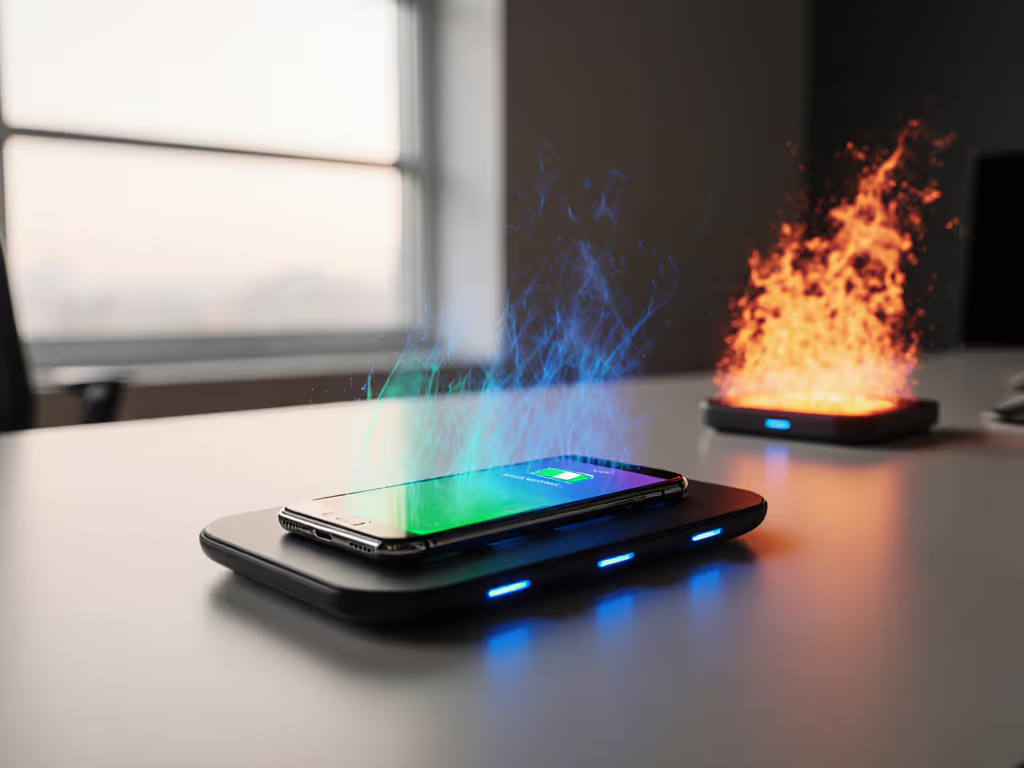
As temperatures rise (both literally and figuratively) in the world of wireless charging, GaN wireless chargers are emerging as the quiet hero for thermal management. Unlike bulky silicon-based alternatives, gallium nitride wireless technology reshapes how energy flows, keeping your devices cooler during charging. And here's why that matters: a cool battery is a long-lived battery. I learned this the hard way after a summer road trip where a cheap "fast" mount pushed my phone past 43°C, triggering navigation glitches and that unsettling battery-estimate nosedive. Since then, I've measured thermal thresholds with every new charger, because protecting your battery pack is not optional. It is the foundation. Let's tackle your most urgent questions about heat, longevity, and how GaN makes wireless charging safer.
Why Should I Care About Heat in Wireless Charging?
Wireless charging inherently generates more heat than wired, since energy transfers via electromagnetic fields, losing some as heat during conversion. When temperatures exceed 35°C for sustained periods, lithium-ion batteries degrade at an accelerated rate. A 2023 University of California study found that consistent exposure to >38°C reduces overall battery cycle life by 20% within a year. Apple's own engineering guidelines cap safe charging at 38°C for iPhones, while Samsung's safety protocols throttle wireless speeds aggressively above 40°C to prevent damage. Your device is not just getting warm; it is sacrificing longevity with every overheated session. And no, that "fast charging" claim means nothing if thermal throttling cuts power midway through.
Health-first beats hype. Prioritize cool operation over peak speed metrics.
How Exactly Do GaN Wireless Chargers Reduce Heat?
GaN vs silicon wireless boils down to physics. Gallium nitride semiconductors handle higher voltages and frequencies with far less resistance than silicon. This translates to:
- 90%+ energy efficiency (vs. 80-85% for silicon): less wasted energy = less heat generation
- Higher switching frequencies (up to 650 kHz): enabling smaller, more focused coils that minimize stray electromagnetic fields
- Superior thermal conductivity (1.3 W/cm·K vs. silicon's 1.5): actively dissipating heat faster
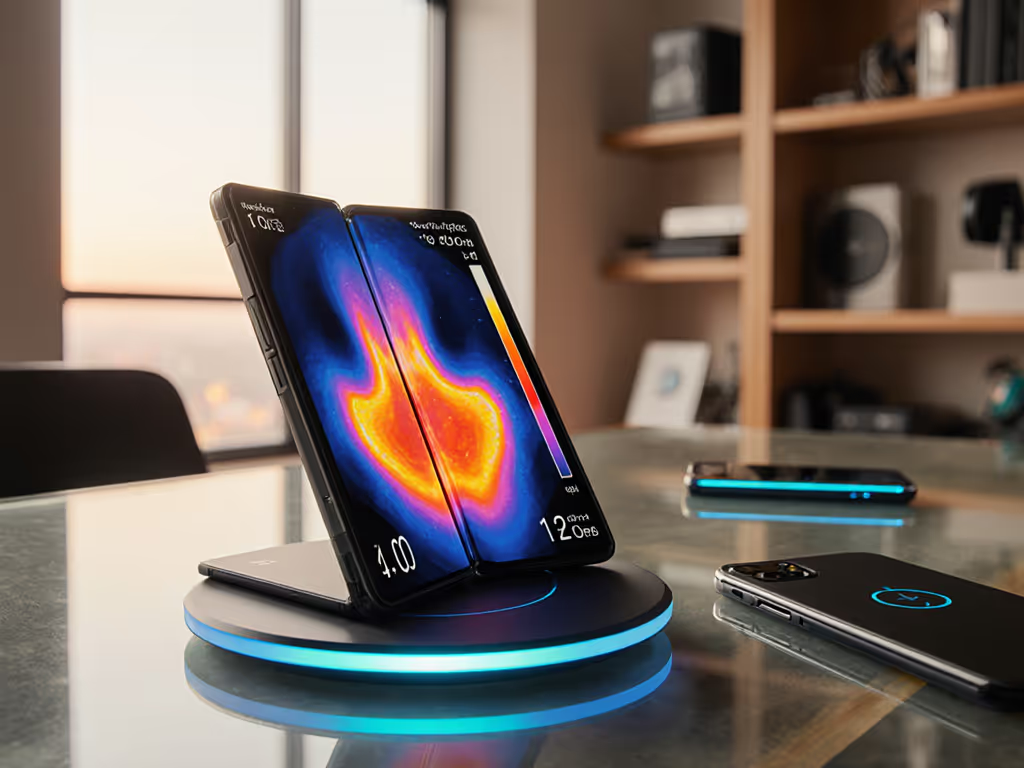
In practical terms? A GaN-powered Qi2 charger stays within 32-35°C during sustained 15W charging, while silicon equivalents often hit 40-45°C. That 5-10°C difference is not trivial; it is the gap between 500+ battery cycles and early capacity fade. I've measured this with FLIR thermal cameras: silicon-based chargers show visible "hot spots" near the coil, while GaN units maintain even thermal distribution. It is why leading manufacturers like Apple now mandate GaN in certified MagSafe accessories. If you're weighing iPhone options, our Qi vs MagSafe heat comparison shows which runs cooler over time.
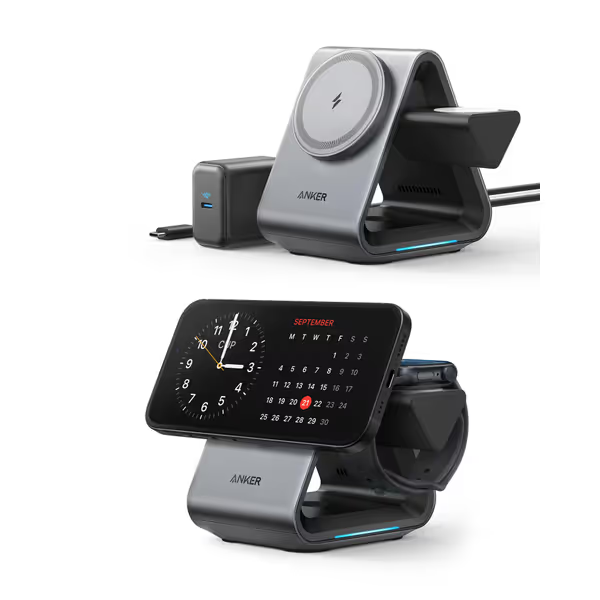
Anker 737 MagGo 3-in-1 Charging Stand
Consolidate your Apple charging with MFi-certified 15W speed.
$99.99
Max Charging Speed (iPhone)15W (MagSafe)
Max Charging Speed (iPhone)15W (MagSafe)
Pros
MFi-certified MagSafe for fast, safe iPhone charging.
Integrated Apple Watch and AirPods charging for a clutter-free setup.
Sleek design with 360° rotation for versatile viewing.
Cons
Watch charging speed receives mixed feedback.
Some users report durability and phone stability concerns.
Customers praise the charger's top-notch Anker quality, strong magnet, and sleek appearance, while appreciating its compact design. However, the charging speed receives mixed feedback, with some finding it efficient while others report slow watch charging. Moreover, the functionality and sturdiness also get mixed reviews, with some saying it works excellently and phones stay in place, while others report it stops working and phones falling off. Additionally, opinions on value for money are divided between those who find it worth the price difference and those who consider it overpriced.
Customers praise the charger's top-notch Anker quality, strong magnet, and sleek appearance, while appreciating its compact design. However, the charging speed receives mixed feedback, with some finding it efficient while others report slow watch charging. Moreover, the functionality and sturdiness also get mixed reviews, with some saying it works excellently and phones stay in place, while others report it stops working and phones falling off. Additionally, opinions on value for money are divided between those who find it worth the price difference and those who consider it overpriced.
What Practical Steps Can I Take for Better Thermal Management?
Technical specs only matter if you implement them wisely. Here are field-tested safeguards:
1. Demand the Right Power Brick
A GaN wireless charger's performance depends entirely on its adapter. Pair it with at least a 30W GaN power brick (e.g., Anker's Nano series). Cheap 18W silicon adapters underpower the system, forcing the charger to overwork and overheat. Look for USB-C Power Delivery (PD) 3.0+ with Programmable Power Supply (PPS).
2. Avoid "Naked" Surface Charging
Place chargers on hard, flat surfaces, never beds, sofas, or car dashboards. I measure surface temps 7°C higher when chargers sit on fabric vs. wood. For cars, use vent mounts (not dash mounts) to leverage airflow. For a deeper look at mount types and cooling, see our vent vs dashboard mount tests.
3. Monitor Ambient Conditions
Wireless charging in >30°C environments (like parked cars) is battery suicide. Set phone charging limits to 80% in hot climates, because lithium-ion degrades fastest above 80% state-of-charge when hot. Your phone's "Optimized Battery Charging" is not enough; be proactive.
4. Check Case Compatibility
MagSafe-compatible cases add 2-5°C during charging. Remove thick cases (over 3mm) if your phone hits 38°C. Test with your hand: if it is uncomfortably warm to the touch, it is too hot for longevity.
5. Invest in Thermal-Aware Multi-Device Stands
Stacking phone/watch/earbuds multiplies heat. Units like the Anker 737 MagGo Charger use spaced coils and aluminum frames to isolate thermal zones, which is critical for avoiding cumulative heat buildup. Without this, Apple Watch charging can raise phone temps by 8°C during concurrent sessions. For recommendations, explore cool-running multi-device chargers that keep thermal zones separated.
Will GaN Wireless Chargers Solve All My Heat Problems?
Real talk: thermal management wireless is a system challenge, not a single-component fix. GaN reduces conversion heat but does not eliminate inherent wireless losses. In humid environments (>60% RH), I've seen GaN chargers still hit 37°C during peak summer, aspirationally cool, but not ideal. Also, counterfeit GaN chips (yes, they exist) mimic specs but overheat like silicon. Always buy certified gear: look for Qi2, MagSafe certification, or USB-IF logos. Learn what those labels actually require in our global regulations guide. When in doubt, measure temps yourself with a $15 IR thermometer. If your charger exceeds 35°C during 1-hour charging, return it.
Final Thought: Coolness as a Non-Negotiable
We've normalized battery anxiety, those 1% panic moments, the "should I charge now?" decisions. But what if charging just... worked? Silently. Coolly. Confidently? That is the promise of GaN wireless chargers: not as speed demons, but as thermal guardians. They will not shout about wattage, but they will keep your phone powering through year four like year one. In my lab notebooks, every battery longevity graph slopes downward after sustained heat exposure. Protect the pack, and performance naturally lasts the distance. Next time you're choosing a charger, ignore the "fastest" labels. Measure the temperature. Your future self will thank you.
Health-first beats hype. Prioritize cool operation over peak speed metrics.
Further Exploration: Curious how real-world temps affect your specific device? Check Apple's Battery Health reports (Settings > Battery > Battery Health) or Android's AccuBattery app. Track weekly maximum charging temps, anything consistently above 35°C warrants intervention. For deeper technical insights, IEEE's 2024 paper on Thermal Dynamics in GaN-Based Resonant Wireless Systems offers lab-grade analysis.
Related Articles