Wireless Charging for DSLR & Mirrorless: Tested
By Asha Raman • 6th May
Why This Matters for Photographers
When you're on assignment or traveling with your camera gear, your phone's battery drains faster than the camera's. GPS navigation, backing up shots to cloud storage, and coordinating with clients all drain power at rates that make a humble wall outlet feel like a luxury. Yet the moment you search for wireless charger solutions optimized for photography equipment and wireless power, you'll find conflicting advice, overheated devices, and products that promise the world but deliver slowdowns in the field.
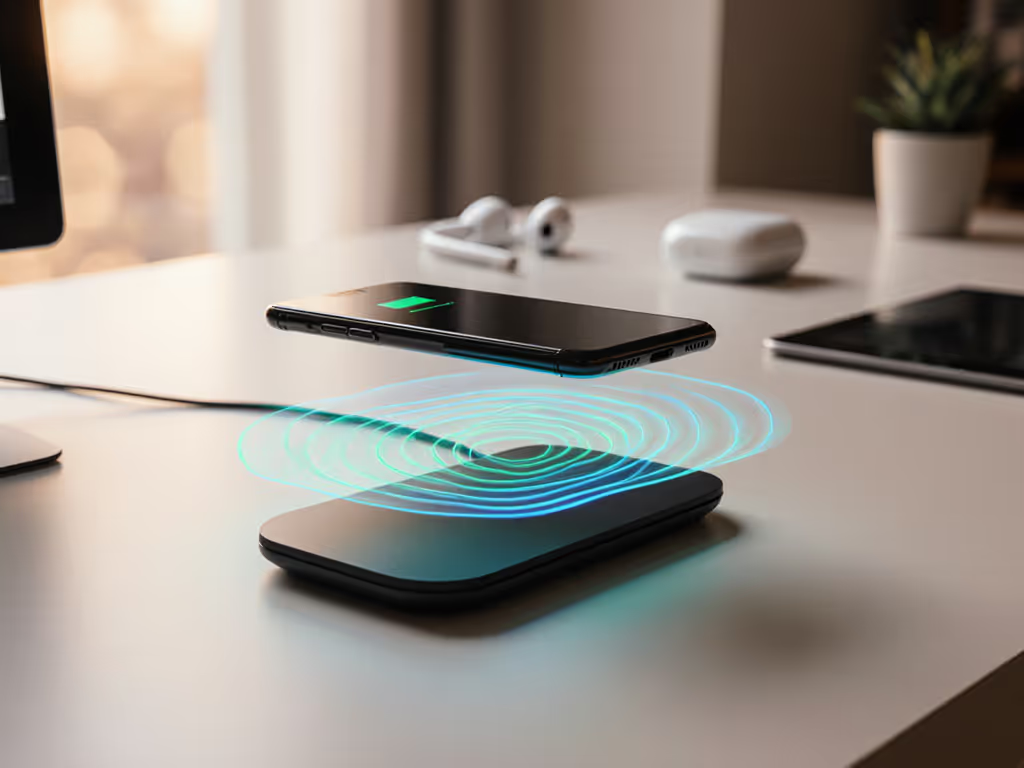
The challenge isn't technical mystery; it is clarity. Most DSLR and mirrorless camera bodies don't natively support wireless charging; instead, photographers manage a constellation of devices: phones, smartwatches, earbuds, and portable batteries. The question becomes not how to wirelessly charge your camera body, but how to build a wireless charging ecosystem that keeps your personal devices healthy, cool, and ready during long shoots (without the cable chaos or the thermal anxiety). If you're deciding between iPhone magnetic charging and standard pads, see our MagSafe vs Qi guide.
I've spent years measuring thermal behavior under real field conditions, and I've learned that the best charging setup isn't the fastest; it's the one that treats your battery pack like a long-lived asset. Protect the pack, and performance naturally lasts the distance.
FAQ Deep Dive: Wireless Charging for Photography Workflows
Q: Do Any Professional Cameras Support Wireless Charging Today?
A: Directly? No. Canon, Nikon, Sony, and Panasonic have not yet built Qi or magnetic charging into their professional DSLR or mirrorless bodies. Camera batteries (such as Canon LP-E6, Nikon EN-EL15, and Sony NP-FZ100) are proprietary form factors with integrated safety chips, making standardized wireless coil integration impractical.
However, the landscape is shifting. As Qi2 (the magnetic variant of Qi standards) matures and power delivery scales up, we may see experimental or prosumer solutions in the next 2-3 years. For now, your workflow revolves around portable backup batteries with wireless charging capabilities and keeping your personal devices topped up wirelessly so they don't drain your camera's spare batteries via USB-C power delivery.
Q: What Does "Wireless Charging for Photography" Actually Mean?
A: It's a layered approach:
-
Personal-device charging in the field: Your phone, earbuds, and smartwatch support Qi or MagSafe. Wireless charging pads or stands in your bag or vehicle keep them topped up without tangling cables.
-
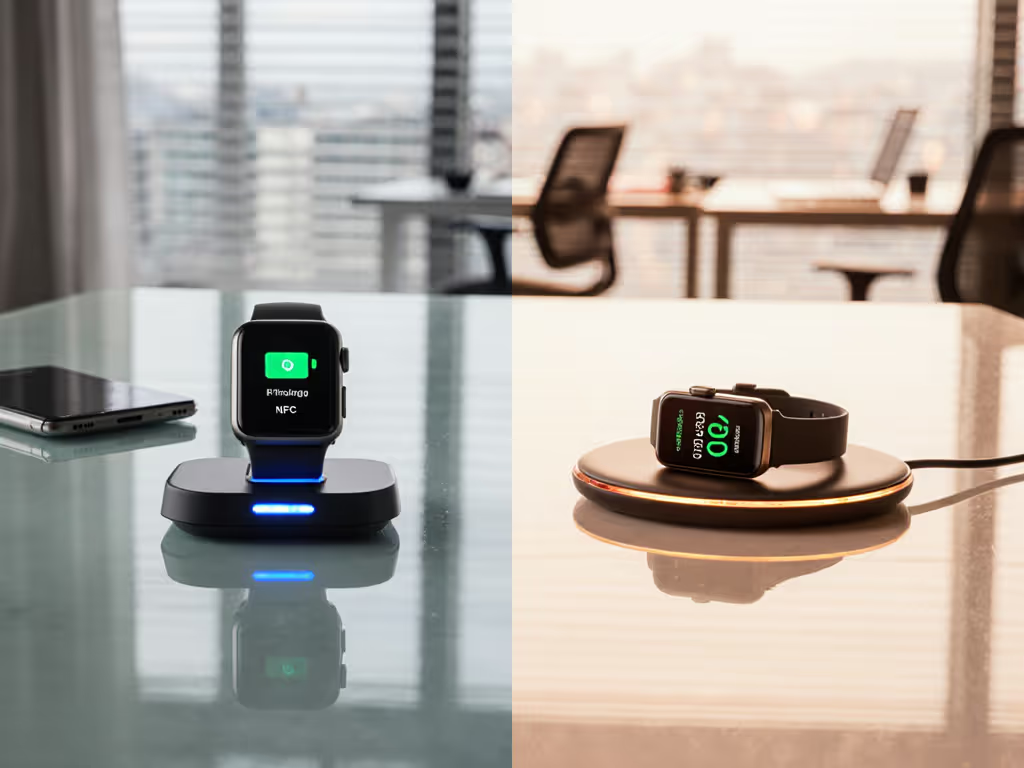
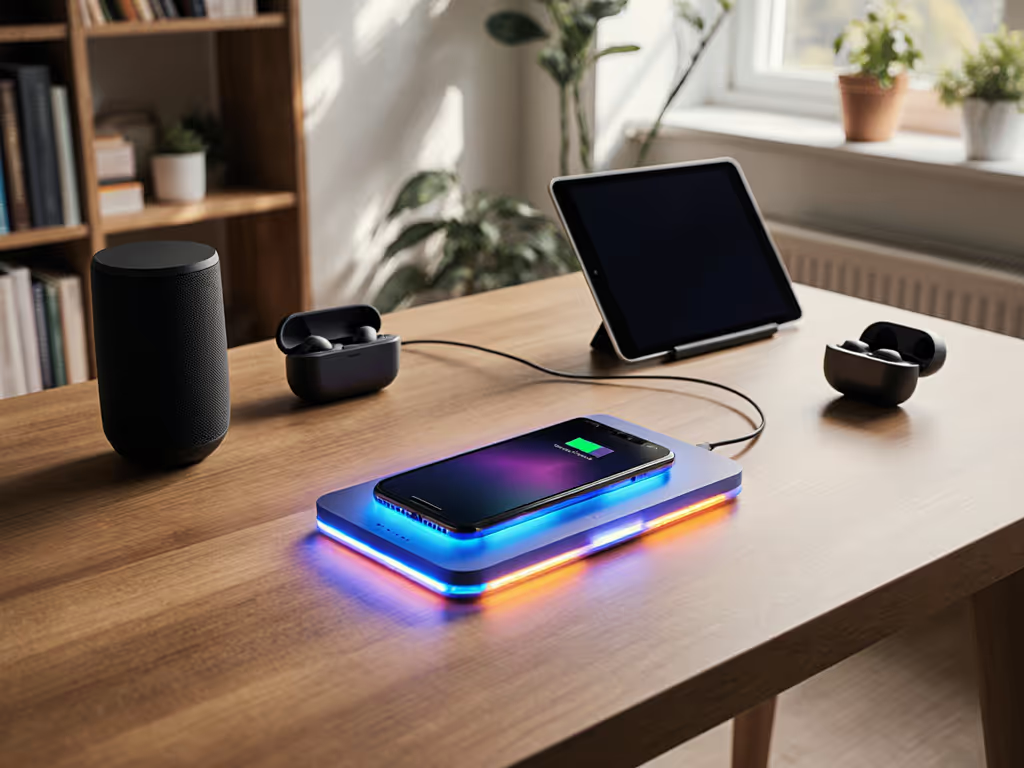
Portable battery ecosystems: Multi-device wireless pads (supporting phone + earbuds + watch simultaneously) let you charge all three at once while reviewing shots on your phone.
-
Vehicle integration: A phone holder with integrated Qi or MagSafe charging means navigation power doesn't drain your battery during long drives to location. For in-car mounting and heat best practices, compare options in our auto wireless charger safety guide.
-
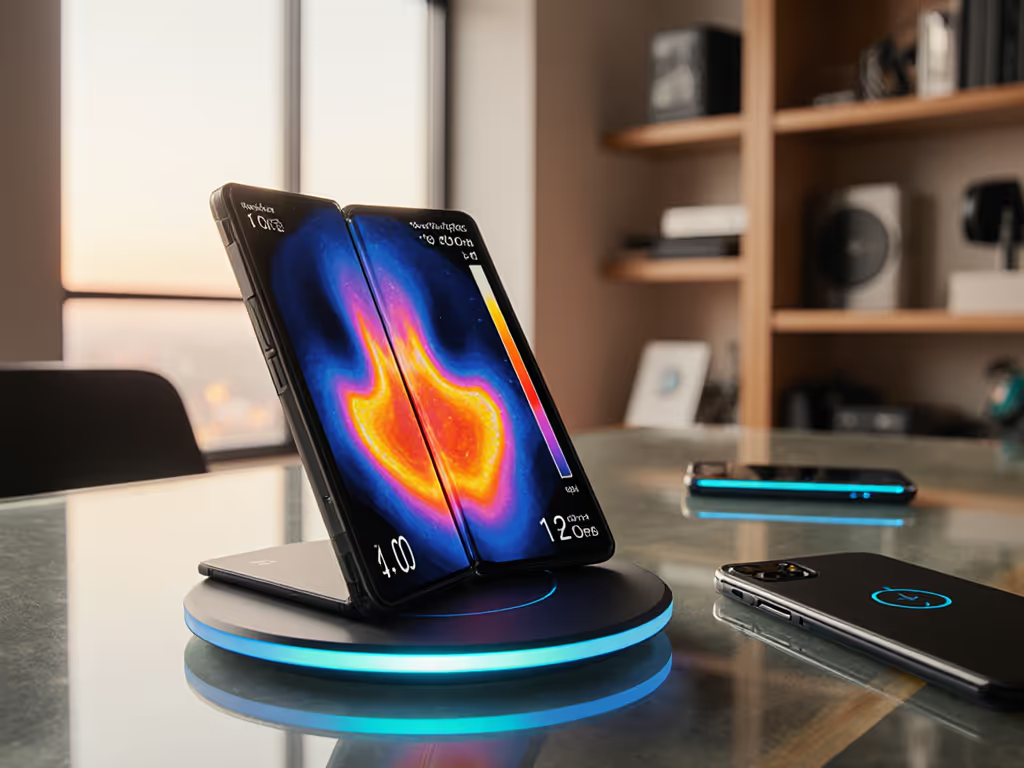
Thermal-safe design: Because field conditions (direct sun, confined car interiors, hot climates) can push wireless chargers above 43°C, you must choose pads with temperature monitoring and active cooling (if you're in harsh environments).
The goal is workflow optimization: fewer cables, strategic power distribution, and confidence that your devices won't thermal-throttle mid-shoot.
Q: How Does Temperature Impact Wireless Charging in the Field?
A: This is where laboratory insight meets real-world pain. On a summer road trip years ago, I mounted my phone on a bargain wireless charger in direct sun. Within 30 minutes, the device climbed above 43°C, a thermal threshold where lithium-ion batteries experience accelerated degradation. Navigation stuttered, the battery estimator became unreliable, and I spent an hour troubleshooting in a parking lot while light faded.
Since then, I've graphed charge rate against ambient temperature. Here's what matters:
- Room-temperature baseline (20-25°C): Qi or MagSafe chargers typically run 35-40°C. Safe, predictable.
- Warm environments (30-35°C ambient): Charger surface can drift to 42-45°C. Battery stress begins; charge rate may throttle.
- Hot vehicles or direct sun (35°C+ ambient): Charger easily exceeds 45°C. Battery enters protective mode, slowing charging and risking long-term capacity loss.
Manufacturer guidance (confirmed by independent research) suggests keeping devices below 35°C during charging for optimal longevity. Health-first beats hype. This means:
- Use shade or a windshield sun blocker in parked vehicles.
- Choose chargers with thermal cutoff or active cooling if you work in hot climates.
- Avoid direct sunlight on the charger pad itself.
- Opt for wired charging during intense field work if device temperature is trending toward 40°C+.
A cool battery is a long-lived battery, and in the field, that discipline is non-negotiable.
Q: How Do Qi, Qi2, and MagSafe Compare for Photographers?
A: Each standard has tradeoffs relevant to your workflow:
| Standard | Speed | Alignment | Heat Profile | Field Durability | Best For |
|---|---|---|---|---|---|
| Qi (5-10W) | Slow (6-12 hrs to full) | Loose, forgiving | Cool; draws ~1W standby | Rugged, low-power scenarios | Backup pads, calm studio workspaces |
| Qi2 (15W capped) | Medium (3-4 hrs to full on iPhones) | Strict magnetic alignment; self-correcting | Moderate; ~1.5W standby | Emerging standard, more precise | New phone purchases; future-proofing |
| MagSafe (iPhone-native, 15-25W with Pro adapters) | Fast (2-3 hrs on iPhones) | Magnetic lock, precise | Can run warm if using 25W brick in sun | Good for iPhone + Apple Watch ecosystem | iPhone photographers, Apple-first workflow |
For photographers specifically:
- If you're iPhone + Apple Watch + AirPods, MagSafe ecosystem is seamless. A single stand handles phone + watch, and thermal behavior is well-documented.
- If you use Android or a mix of devices, Qi2 pads offer standardization and future compatibility without proprietary lock-in.
- Qi (original standard) remains safe and reliable for slower, stationary scenarios (your studio desk, overnight bag, hotel nightstand) where speed is not critical.
Q: What About Travel and Field Kits?
A: Photographers often move between studio, location, and travel. A practical wireless charging travel kit balances weight, thermal safety, and multi-device support: Before packing, compare sustained output and throttling in our wireless power bank comparison.
Minimal (ultralight travel):
- One dual-port USB-C power brick (60-90W GaN, <150g)
- One Qi2 or MagSafe pad (~150g)
- One USB-C cable (marked for high power delivery)
- Adapter for local outlets
- Fits: phone + one secondary device (earbuds OR watch); supports wired backup for camera batteries
Standard (week-long assignment):
- 65W GaN multi-port brick with USB-C and USB-A
- Two-device Qi2 pad or modular MagSafe stand
- USB-C and USB-A cables
- Portable Qi-enabled battery pack (10,000–20,000 mAh) for extended field work
- Car vent mount (MagSafe or friction-based) with 12V USB-C adapter
- Fits: phone, watch, earbuds, and backup charging for both devices
Heavy (studio or home base):
- Desktop charging dock with built-in stand (phone + watch + earbuds)
- Separate USB-C wired charger for camera batteries (proprietary to your body)
- Monitor-mounted arm for StandBy or Always-On display mode
- Fits: dedicated workspace with no travel friction
Critical safeguard: Test your travel kit before a shoot. Verify:
- That your power brick delivers advertised wattage to the Qi pad (cheap bricks often don't).
- That your case (if thick or metallic) doesn't block wireless coils.
- That the pad runs cool (check its surface temp with a thermal camera or temp gun after 30 min charging).
Q: Should I Use Wireless or Wired Charging for Extended Field Work?
A: It depends on thermal and time constraints.
Use wireless when:
- You're at a stable location (studio, base camp) and heat is manageable.
- Your devices are already at 20-80% charge (the safest window for battery health).
- Environmental temperature is below 30°C.
- You have a 2-3 hour window and speed is not critical.
Use wired when:
- You're in high-heat environments (30°C+ ambient, direct sun).
- You need a quick top-up (15 min to 1 hour).
- Your backup battery is critically low and time is tight.
- You're charging inside a vehicle in sunlight.
Many professionals adopt a hybrid approach: wireless overnight or during breaks; wired fast-charging during active shooting. This preserves battery longevity by minimizing cumulative thermal stress.
Q: What Certifications and Safety Standards Matter?
A: Not all wireless chargers are created equal. Look for:
- Qi certified (from the Wireless Power Consortium): Guarantees interoperability and baseline safety (thermal cutoff, FOD (foreign object detection)).
- Qi2 certified: Adds magnetic alignment precision and slightly higher power budgets.
- UL or CE certification: Independent safety validation for electrical safety.
- Thermal monitoring: Reputable pads include temperature sensors that throttle output if the coil exceeds ~50°C.
Counterfeits are common. Bargain pads often lack FOD circuits, meaning metal objects near the charger can overheat invisibly. Avoid unlabeled gear, especially on travel. Spend the extra 10-15% for certified products; your battery's longevity (and safety) depends on it.
Q: How Do I Optimize Wireless Charging for Mirrorless Workflows Specifically?
A: Mirrorless cameras introduce unique demands:
-
Smaller bodies, higher power density: Mirrorless bodies run hotter internally due to compact layouts and continuous autofocus. Your backup phone charger should run cooler, not hotter, to balance the overall thermal budget in your gear bag.
-
USB-C charging on some models: Newer mirrorless (Sony Alpha series, Panasonic Lumix S5II) support USB-C wired charging. While not wireless, USB-C accepts higher power delivery, meaning faster battery top-ups. If your phone also uses USB-C, a single high-capacity power brick can serve both devices in a pinch.
-
Battery-grip considerations: Battery grips (which hold two or more batteries) require dedicated chargers or external USB-C delivery. Wireless charging doesn't apply here, but understanding your battery ecosystem lets you design a robust backup plan.
-
Workflow rhythm: Mirrorless photographers often tether phones or use them for focus bracketing, focus stacking, or remote triggering. Your wireless phone charger should live on your desk or tripod mount, not buried in a bag, so you can charge passively while working.
Key Takeaways: Testing Real-World Scenarios
Studio & Studio Workspace
- Desktop Qi2 or MagSafe dock with phone + watch charging simultaneously
- Ambient temp naturally ~22°C; thermal overhead is negligible
- Wired camera battery charger nearby for quick swaps
- Verdict: Wireless is ideal; prioritize aesthetics and silence (no fan noise)
Travel & Field
- Compact 60W GaN brick + Qi2 pad (or MagSafe stand) in camera bag
- Use shade and avoid direct sun; surface temp should stay <40°C
- Fallback: USB-C wired charging if thermal creep is observed
- Verdict: Wireless is convenient but thermally fragile; test before deployment
Vehicle/Car
- MagSafe or Qi2 vent mount with separate 12V USB-C adapter
- Sunshade essential; never rely on wireless in parked car in summer
- Navigation doesn't throttle if phone stays <35°C
- Verdict: Wireless works for moderate climates and short trips; switch to wired in intense heat
Overnight/Slow Charging
- Any Qi pad on nightstand or hotel desk (5-10W)
- Overnight charging keeps device below 35°C; battery health improves
- No rush; time is abundant
- Verdict: Wireless is optimal; charge before bed, device ready by morning
Extended Field Session (6-12 hrs)
- Portable Qi-enabled battery pack (20,000 mAh) as redundant backup
- Use wired charging to camera backup battery (via USB-C or proprietary charger) if possible
- Reserve phone for navigation; don't rely on wireless to keep it topped up
- Verdict: Hybrid approach (wired for camera, wireless for personal devices at base camp) is safest
Wrapping Up: Health-First Beats Hype
Wireless charging for photography isn't about equipping your camera body with Qi coils; it is about building an intentional, thermally safe ecosystem around your personal devices so they don't compete for power or run hot during shoots. Your phone, watch, and earbuds are critical tools; treating them with thermal respect pays dividends in reliability and longevity.
The photographers who get the most out of wireless charging are those who test first, prioritize cool operation, and know when to switch back to wired power. You don't need the fastest charger; you need the safest one that fits your specific workflow.
Further Exploration
Ready to audit your own setup? Start with these steps:
-
Identify your devices' native charging standards: Do you own an iPhone (MagSafe), Android phone (Qi/Qi2), and smartwatch? List them.
-
Test thermal behavior: If you already own a wireless pad, use a thermal camera or infrared thermometer to measure its surface after 30 minutes of charging in a warm room (25-30°C). If it exceeds 42°C, it's a candidate for replacement.
-
Map your movement: Which environments do you charge in most (studio, travel, car, hotel)? Each may need different gear.
-
Check certifications: Before buying new pads, verify they're Qi or Qi2 certified and include thermal monitoring.
-
Plan your kit: Use the travel-kit framework above to design a setup for your primary use case. Start small; expand only as you prove each layer works.
Your battery's future is shaped by the habits you build today. Start with the cooler option, measure as you go, and remember: longevity is the ultimate flex in a field where reliability defines your reputation.
Related Articles