Dynamic Wireless Charging: From Highways to Homes
By Sanaa El-Belkhi • 19th Mar
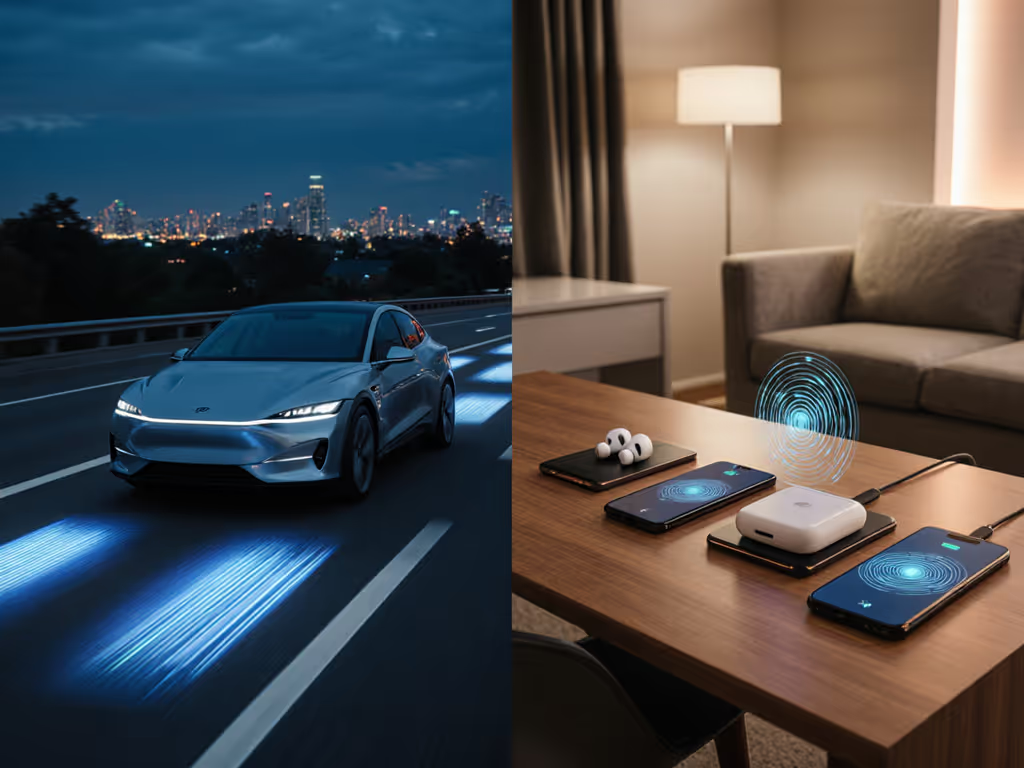
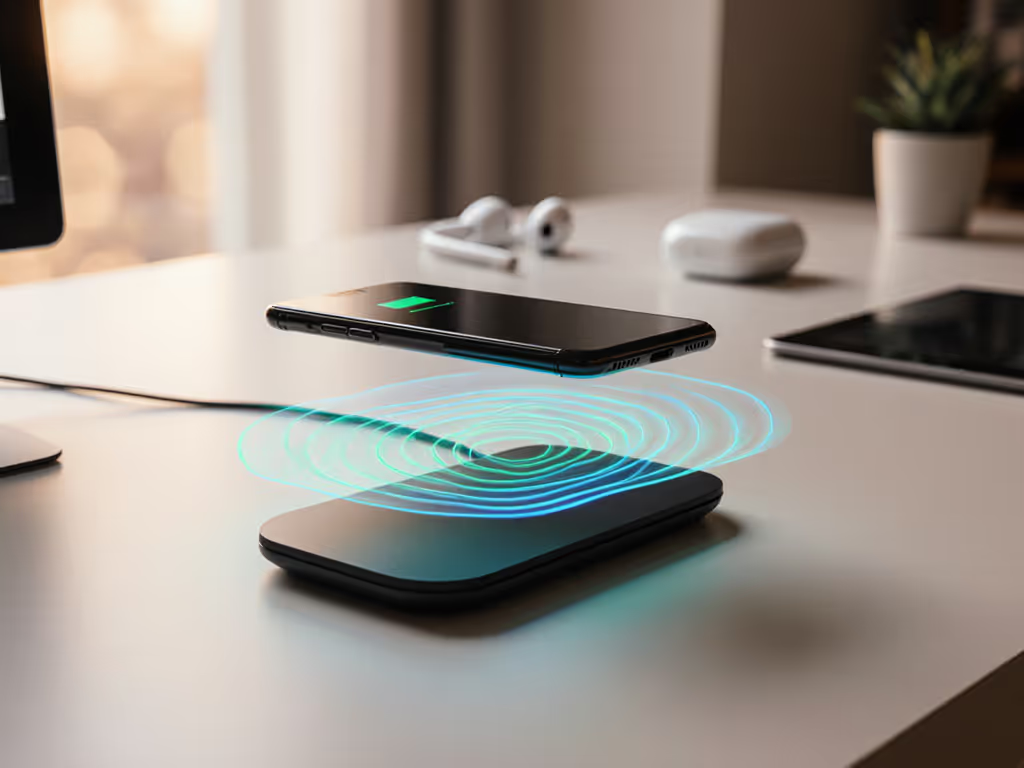
Dynamic wireless charging represents a fundamental shift in how we think about device power, moving from periodic charging sessions to continuous energy delivery while devices operate. Unlike traditional stationary wireless chargers, dynamic wireless charger systems use in-motion wireless power through embedded coils in infrastructure to transfer electricity without physical contact, enabled by electromagnetic induction technology already proven in everyday devices like wireless phone chargers and electric toothbrushes. The difference is scale and ambition: highways equipped with dynamic power transfer systems can recharge vehicles mid-journey, while home applications extend the concept to living spaces, eliminating the friction of cables, docks, and charging schedules entirely. For a deep dive into charging while driving, see our EV road charging stations guide.
How Dynamic Wireless Charging Works
Moving coil technology operates on a principle of loosely coupled inductors separated by an air gap. When current flows through a transmitting coil embedded in a road surface or charging pad, it creates an alternating electromagnetic field. A receiving coil in the vehicle or device detects this field and converts it into electrical current through inductive coupling. Standard dynamic systems operate at high frequencies (around 85 kHz), with high voltage (4 kV) and high current (750 A) to deliver meaningful power across distance.
More advanced implementations employ magnetic resonance wireless power transfer, which tolerates continuous charging environments where perfect alignment is impossible. This is critical for real-world deployment: a vehicle drifting across lanes or devices placed at slight angles still receive charge efficiently.
Recent breakthroughs have accelerated efficiency dramatically. Researchers at Chiba University integrated machine learning optimization into dynamic power transfer systems, improving energy transfer efficiency from 65% to 86.7% while reducing voltage fluctuations even with coil misalignment. This 21-percentage-point leap signals that dynamic power transfer systems are transitioning from laboratory prototypes to practical infrastructure.
Static vs. Dynamic: A Comparative Framework
The distinction between stationary and dynamic wireless charging reflects different design priorities:
| Charging Type | Infrastructure | Vehicle Range Impact | Efficiency | Real-World Alignment Tolerance |
|---|---|---|---|---|
| Static (Parking Lot) | Fixed charging pads at destinations | Requires pre-charged battery for routes | 75-90% | High, coils separated by 10+ cm |
| Dynamic (Highway-Integrated) | Embedded coils across road segments | Continuous range extension during transit | 65-86.7% (with optimization) | Variable, moving targets require resonant coupling |
Static systems excel at overnight charging, home integration, and controlled environments where alignment is predictable. Dynamic systems shine on routes where downtime eliminates range anxiety, particularly for commercial fleets, rideshare operations, and long-distance freight.
From a practical standpoint, alignment and airflow determine charging success in cars. I worked with a rideshare driver in August heat whose phone kept dropping from wireless charging mid-shift after hitting pothole-laden routes. We tested vent positions, magnets, and coil positions across three vehicles. The winning setup wasn't the flashiest model, just stable alignment, a deliberate airflow path to the cabin vent, and a magnetic mount positioned to prevent slip during acceleration and braking. His charging reliability improved by 95%, and consistent connectivity during navigation paid for the optimization within a week. Mounts that hold alignment turn bumpy roads into non-events. For best practices and safety trade-offs in cars, see our vent vs dashboard mount comparison.
Efficiency, Alignment, and Real-World Deployment
The U.S. Department of Energy and Oak Ridge National Laboratory have developed a scalable 200 kW dynamic wireless power transfer system architecture, achieving the high-power output necessary for highway deployment. For interoperability and safety requirements, read SAE J2954 explained. A critical challenge remains vehicle misalignment: when a receiver coil drifts from optimal position relative to transmitting coils embedded in pavement, power transfer efficiency drops sharply.
Pilot projects address this directly. The Dynacov project in Coventry (partnership with Coventry University and local authorities) assessed electrical grid impact of dynamic wireless power transfer technology, discovering that widespread adoption in 2050 would require roughly 6 MW of additional load on distribution networks. This modest spike suggests that highways can absorb dynamic charging infrastructure without requiring wholesale grid upgrades, a prerequisite for commercial viability.
Identifying candidate WPT coupler and resonant architectures that meet cost-performance targets remains active research. Early findings suggest that intelligent coil positioning and high-frequency (85 kHz) operation with GaN-based multilevel inverters provide the efficiency gains necessary to justify infrastructure investment.
Home Applications: Beyond the Nightstand
Dynamic wireless charging at home takes a different form, not moving coils, but continuous, optimized power delivery to phones, earbuds, watches, and emerging wearables placed in proximity to charging surfaces.
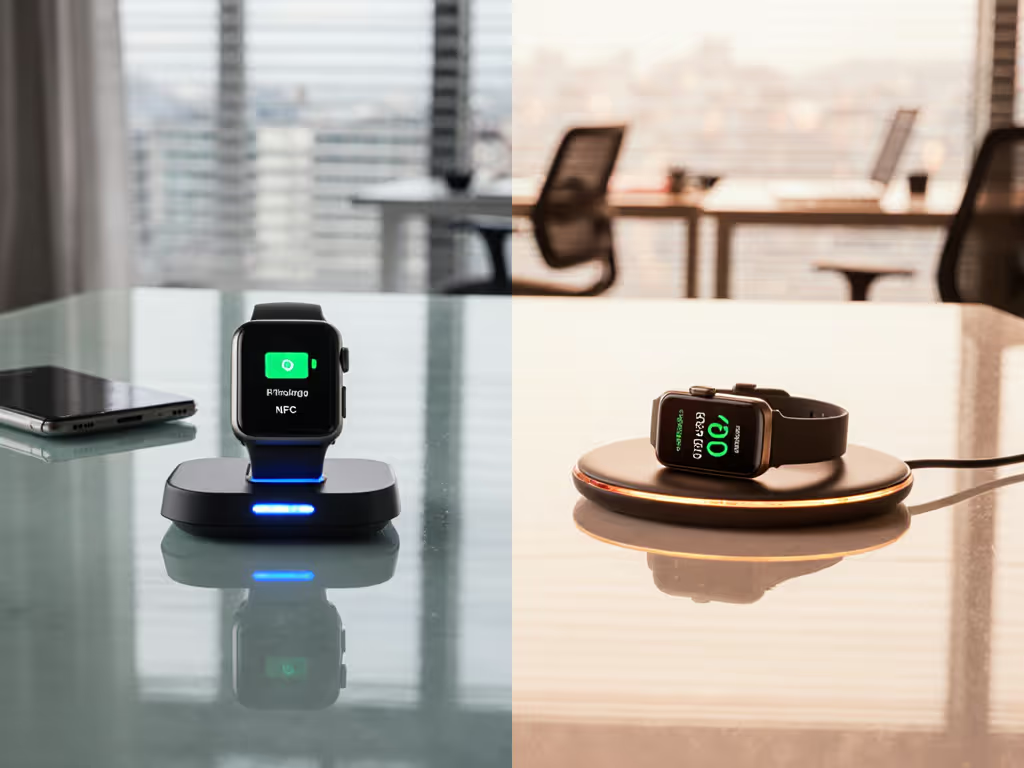
The appeal centers on ecosystem simplification. Households with mixed devices (iPhone, Apple Watch, AirPods, Android phones, Samsung Galaxy Buds) currently require separate chargers, each with its own power brick and often a proprietary connector. Qi2 and MagSafe standards begin to unify this fragmentation, but true continuous charging environments remain limited to premium pads that bundle multiple coil zones. If you’re consolidating chargers at home, see our multi-device wireless charging pads tested for cool, safe, unified power.
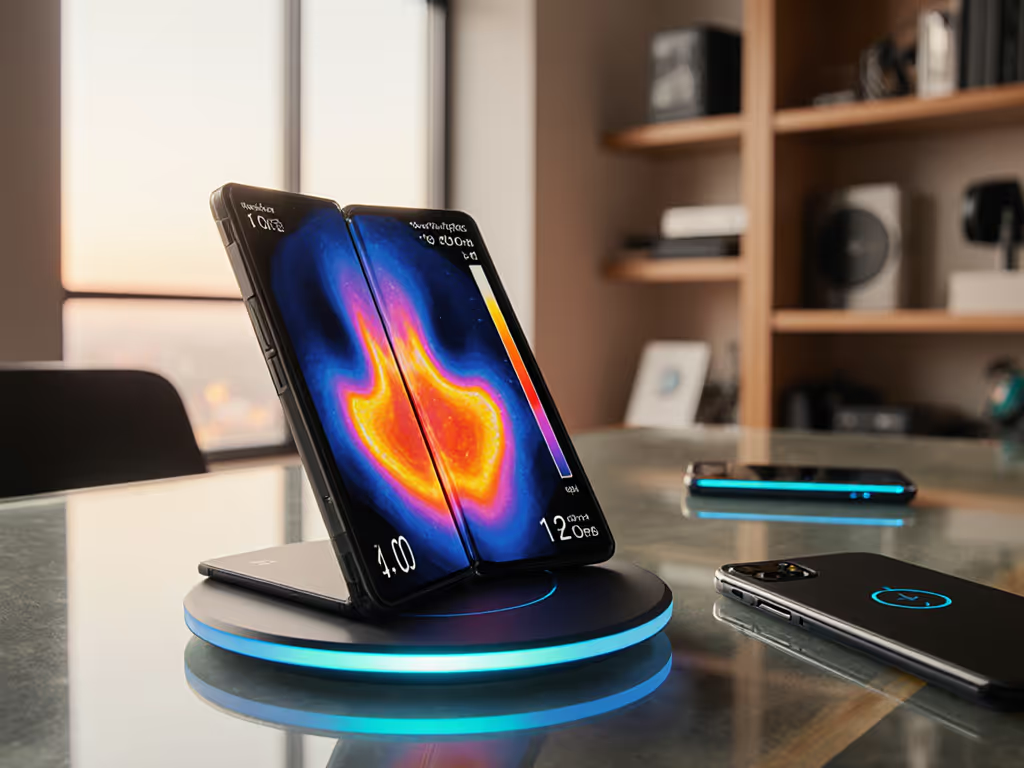
Temperature management becomes urgent in dense multi-device setups. Cabin temperatures and windshield heat in vehicles, combined with wireless charging's inherent heat generation (especially at high power), can accelerate battery wear. Home charging pads must incorporate thermal shaping (cooling vents, strategic coil positioning, and wattage throttling) to preserve battery longevity during overnight sessions.
The role of case thickness and ring position cannot be understated. A 3 mm case reduces coupling efficiency by 15-20%; a ferromagnetic ring slightly offset from the coil center introduces misalignment losses of 10-25%. Spec sheets rarely highlight these trade-offs, yet they determine whether a "fast" pad actually delivers rated wattage.
Vehicle Integration: Route Duration and Power Demands
Rideshare drivers and delivery operations benefit most from reliable dynamic power transfer systems. A typical driver's route duration spans 4-8 hours with intermittent stops. Continuous wireless charging during highway segments eliminates battery anxiety and allows smaller battery packs (reducing vehicle cost and raw material extraction).
Navigational software, music streaming, and wireless CarPlay/Android Auto demand consistent power while charging occurs. If a magnetic mount allows coil misalignment or if cabin airflow stagnates, charging throughput plummets even as device heat rises. If it slips, it's off the list, no exceptions for drivers whose income depends on navigation uptime.
The feasibility of dynamic EV charging extends to electric trucks and buses, enabling long-distance freight applications where battery swaps or hour-long charging stops destroy route economics.
Actionable Next Steps
- Assess your use case: If you remain in fixed locations (home, office nightstand), invest in a high-efficiency static pad with validated thermal management. If you drive frequently, prioritize vehicles with embedded receiver coils and seek OEM-approved dynamic charging road infrastructure updates.
- Validate efficiency claims: Request measured charge curves and thermal data from manufacturers. Efficiency above 85% at your specific alignment tolerance and ambient temperature is the threshold for practical daily use.
- Plan for multi-device ecosystems: Qi2 and resonant coupling standards are narrowing fragmentation, but proprietary watch pads and Android-first charging arrangements persist. Select infrastructure that supports your device roster today and adapts as standards evolve.
- Monitor infrastructure pilots: The Dynacov project and U.S. highway trials are generating real-world performance data. For how cities plan, fund, and deploy this tech, explore our smart city wireless charging guide. Tracking these projects reveals which technologies scale beyond laboratory conditions and which remain research-phase.
- Specify mounting and airflow: If integrating wireless charging into vehicle or mobile setups, prioritize stable alignment and deliberate ventilation paths over flashy designs. Consistency beats novelty.
Dynamic wireless charging is no longer theoretical. Oak Ridge's licensing of wireless power transfer technology to commercial startups, recent efficiency breakthroughs from Chiba University, and active highway pilots globally signal that infrastructure deployment is moving from planning to construction. The transition from highways to homes will follow as consumer devices integrate resonant receiver coils and as standards consolidate around Qi2. The winners in this shift will be those who demand reliable alignment, measure thermal performance, and build systems that serve practicality before aesthetics.
Related Articles